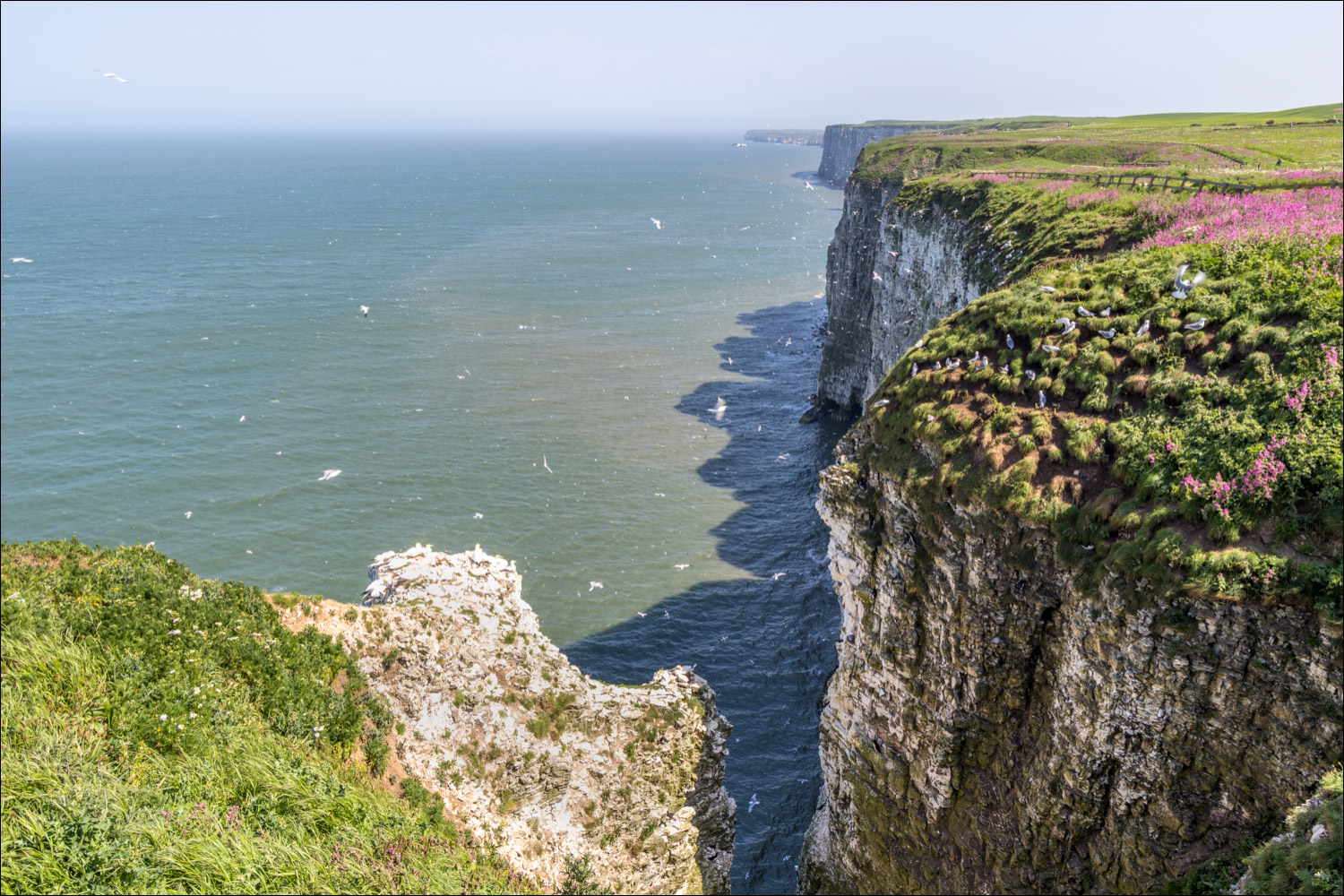
Route: Bempton Cliffs
Area: East Yorkshire
Date of walk: 28th May 2026
Walkers: Andrew and Gilly
Distance: 2.8 miles
Weather: Sunny, strong wind on the cliff tops
Bempton Cliffs is billed as ‘the best place in England to see, hear and smell seabirds’. It’s a spectacular place, especially at this time of year when sea birds nest here in their thousands. Between April and August each year, almost a quarter of a million seabirds come to Bempton and make the huge chalk cliffs come alive. The RSPB have provided various viewing points from which to see the non-stop action
Puffins, gannets, kittiwake, guillemot and razorbill are everywhere, nesting in every crook and cranny along the huge cliff face. It’s fascinating to watch them jostling for position, warding off predators, bringing food to the nests and generally leading their very busy lives
We parked by the new RSPB Visitor Centre and walked along the path to the edge of the cliffs, visiting each of the viewing stations in turn. The stations are well positioned, perched on the top of the cliffs and giving wonderful close up sightings of the seabirds, especially the gannets which can be photographed without the need for a telephoto lens. I’d hoped for a few puffin photos but for some reason they were all out at sea today and we only had a few distant sightings. There was so much else to see that this didn’t matter, it was another fantastic visit to this special place
For a unique view of Bempton Cliffs from the sea follow the link to the ‘Glorious Gannet Cruise‘
For other walks here, visit my Find Walks page and enter the name in the ‘Search site’ box
Click on the icon below for the route map (subscribers to OS Maps can view detailed maps of the route, visualise it in aerial 3D, and download the GPX file. Non-subscribers will see a base map)

Scroll down – or click on any photo to enlarge it and you can then view as a slideshow
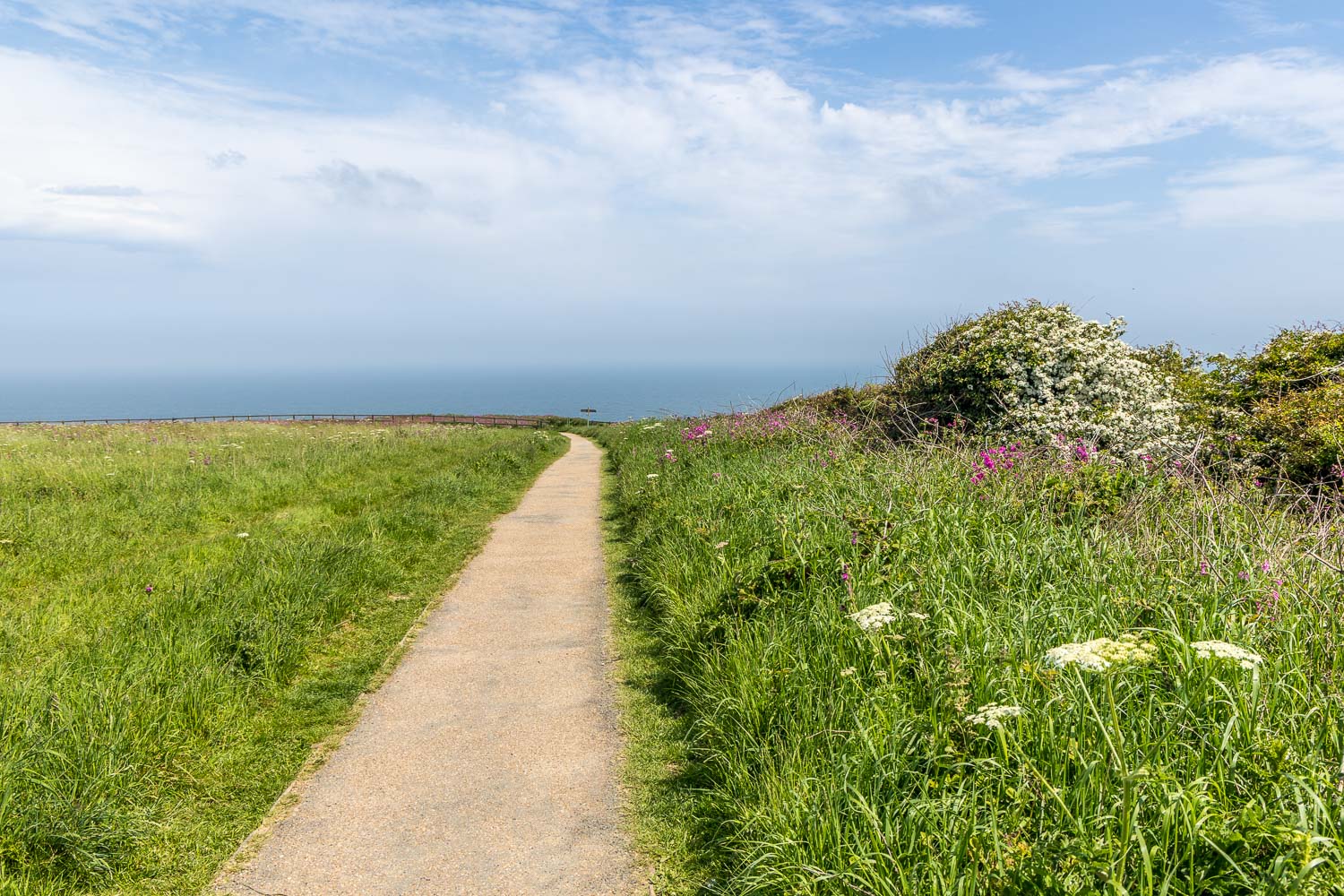
We head towards the North Sea from the RSPB Visitor Centre at Bempton Cliffs
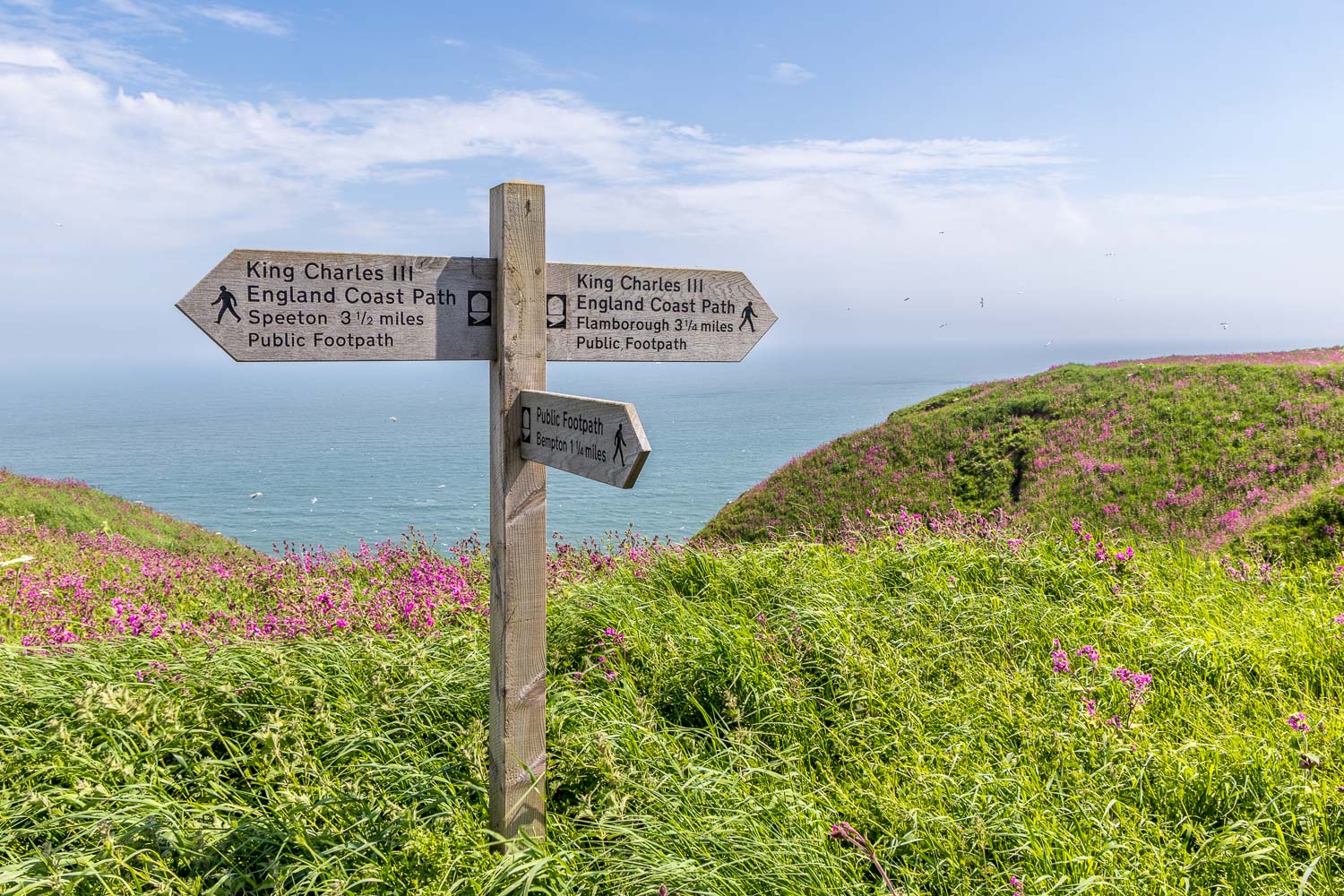
We turn right at the sign. The King Charles III England Coast Path when completed will be the longest managed coastal walking route in the world. The 2,700 mile path will encircle the entire English coastline
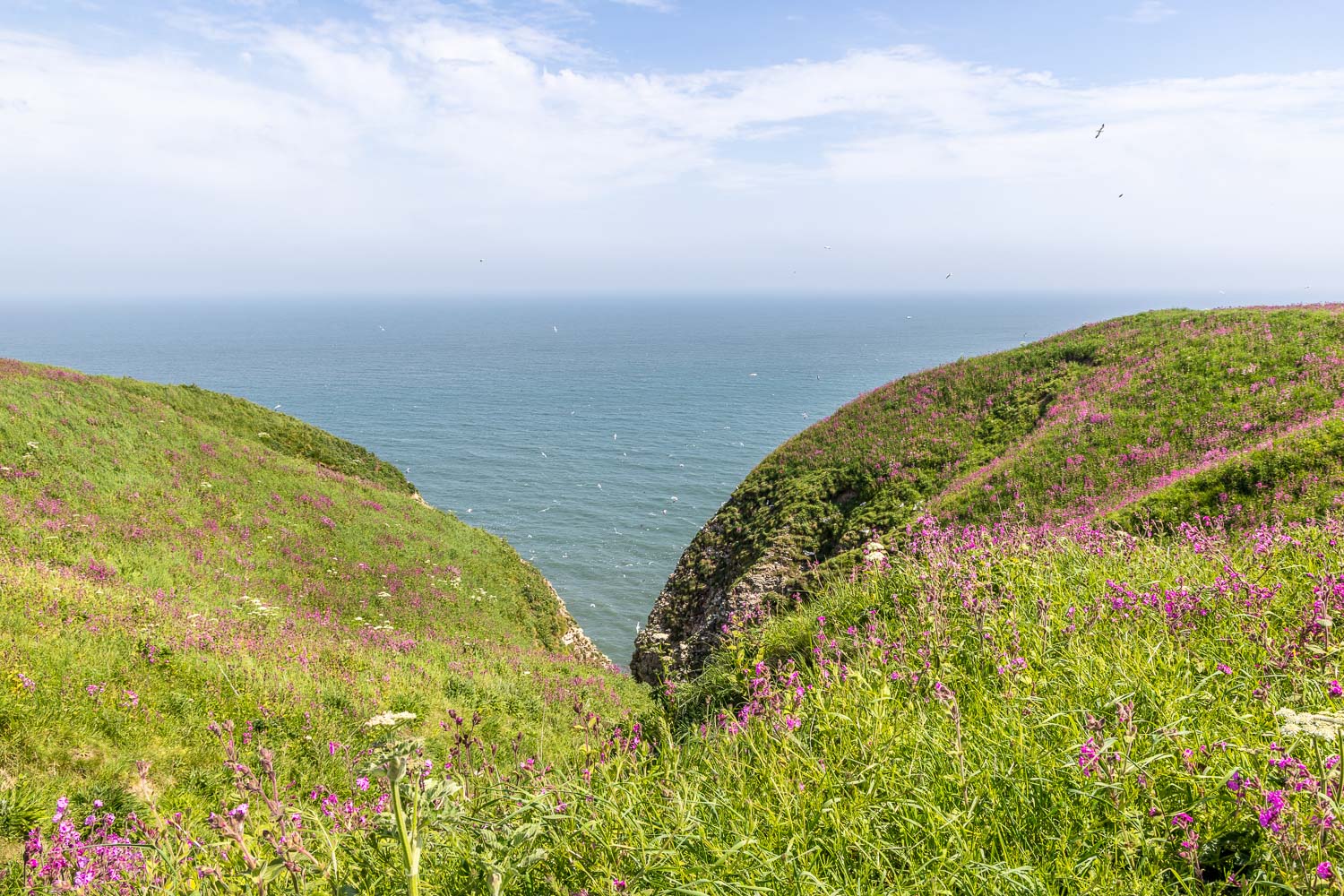
Swathes of red campion in the grassland at the top of the cliff
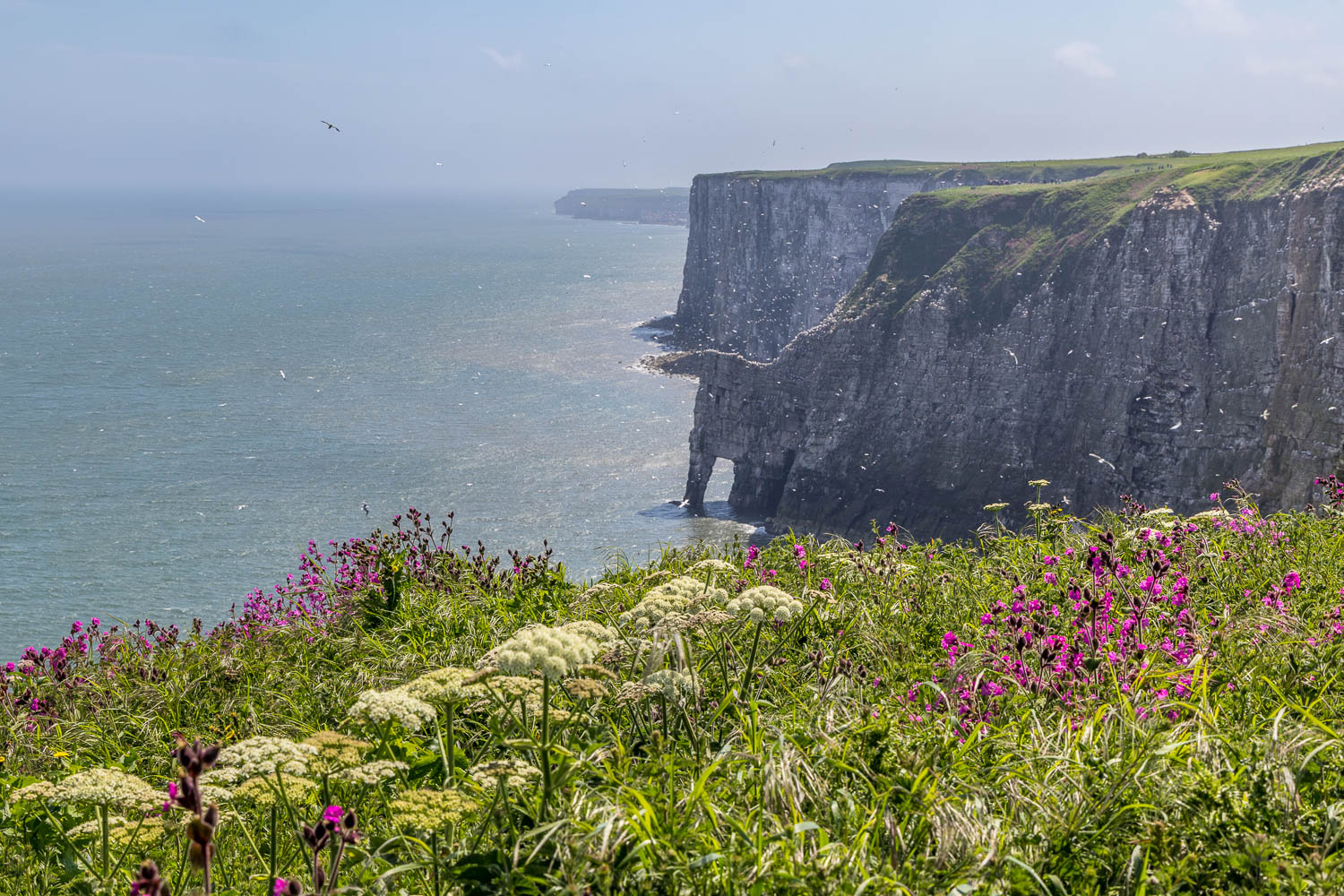
Looking south along Bempton Cliffs towards Flamborough
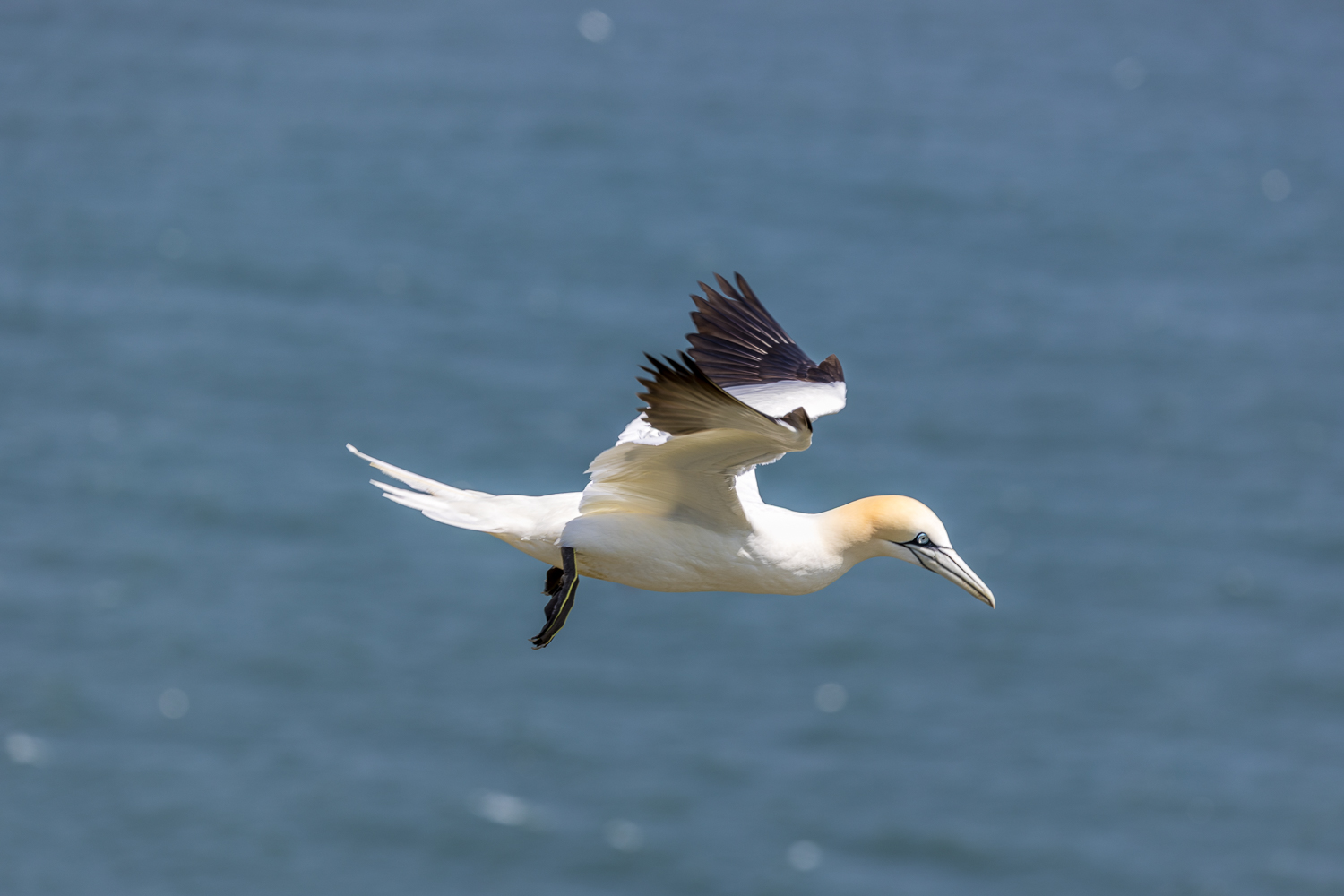
A gannet...
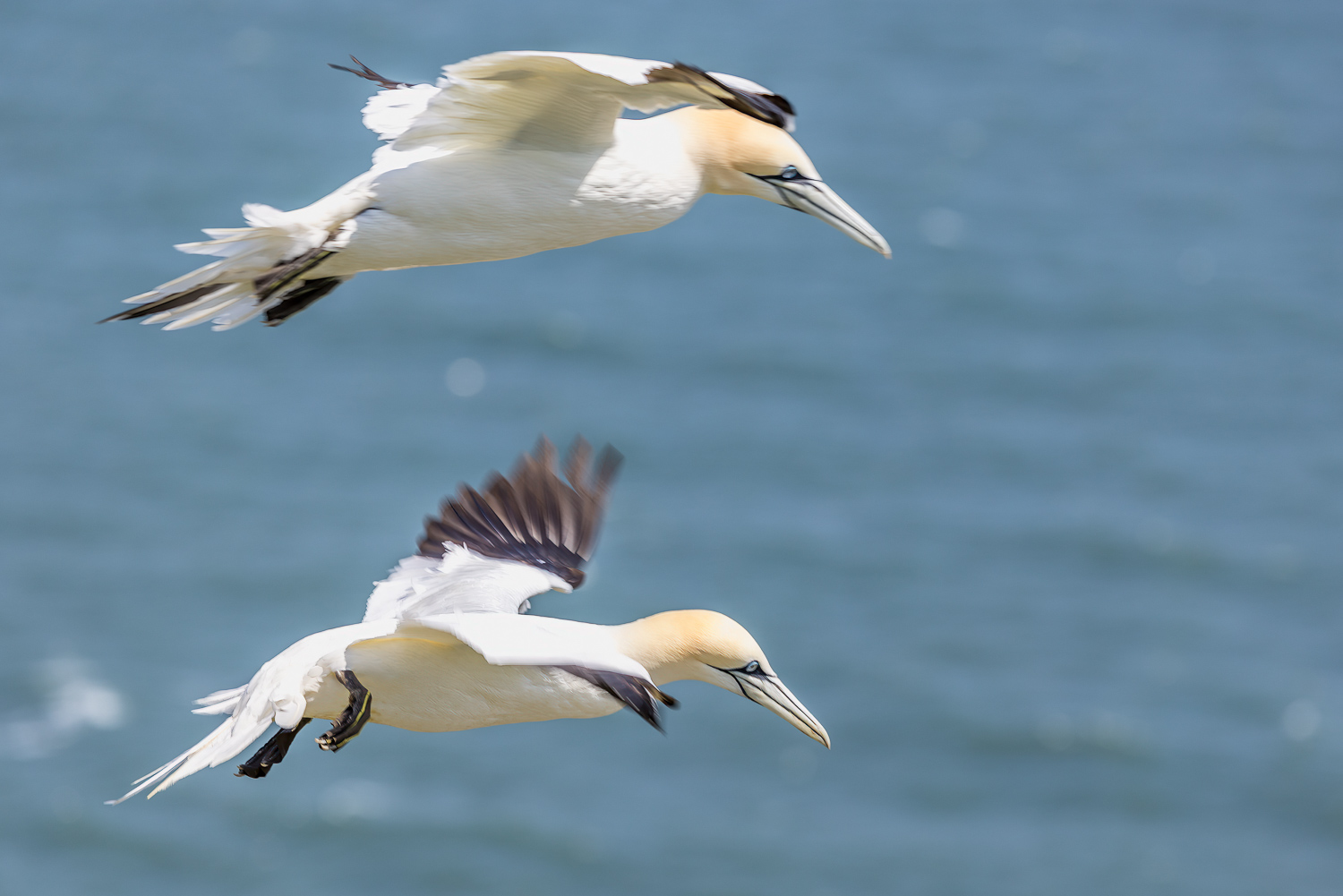
...two gannets...
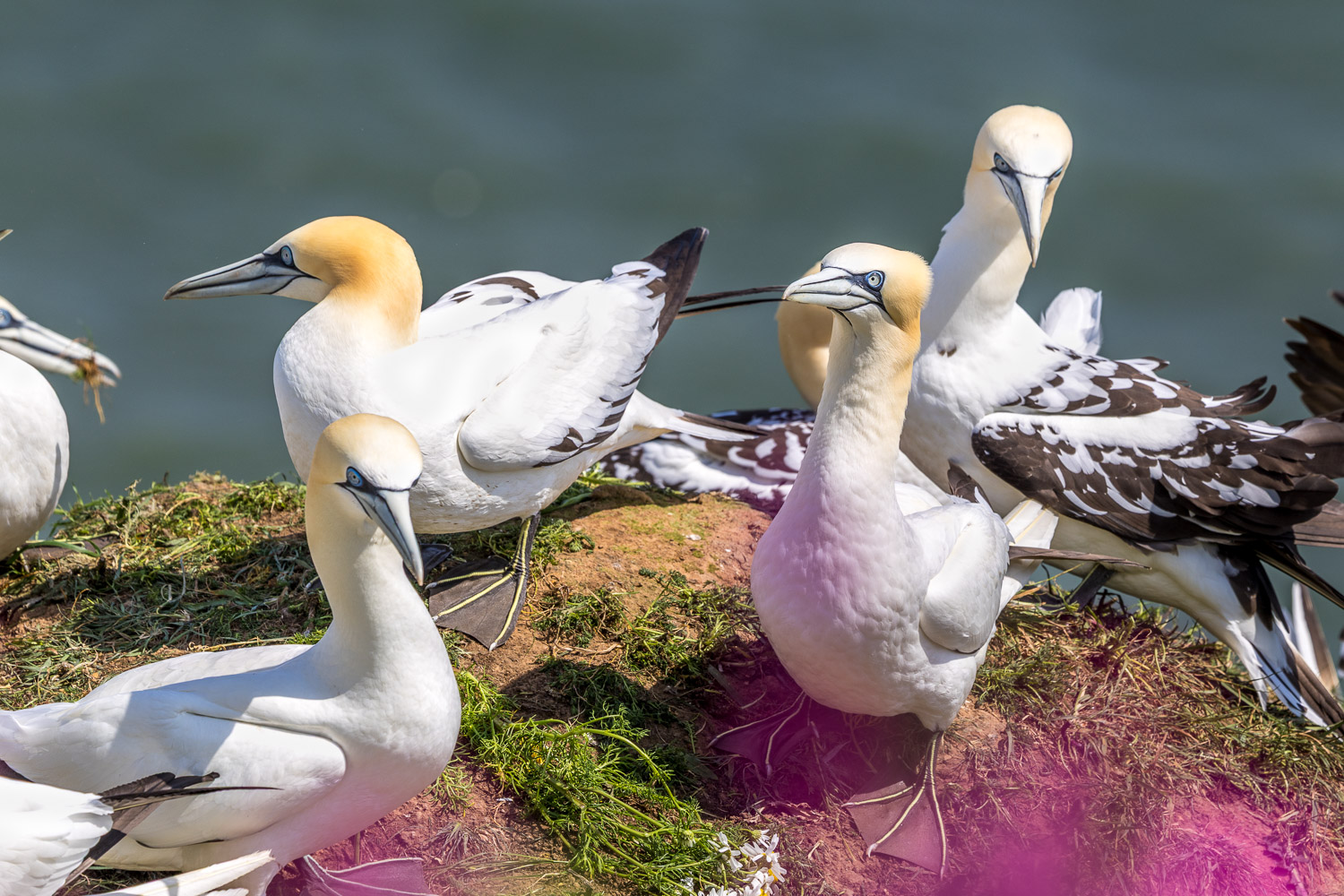
...several gannets...
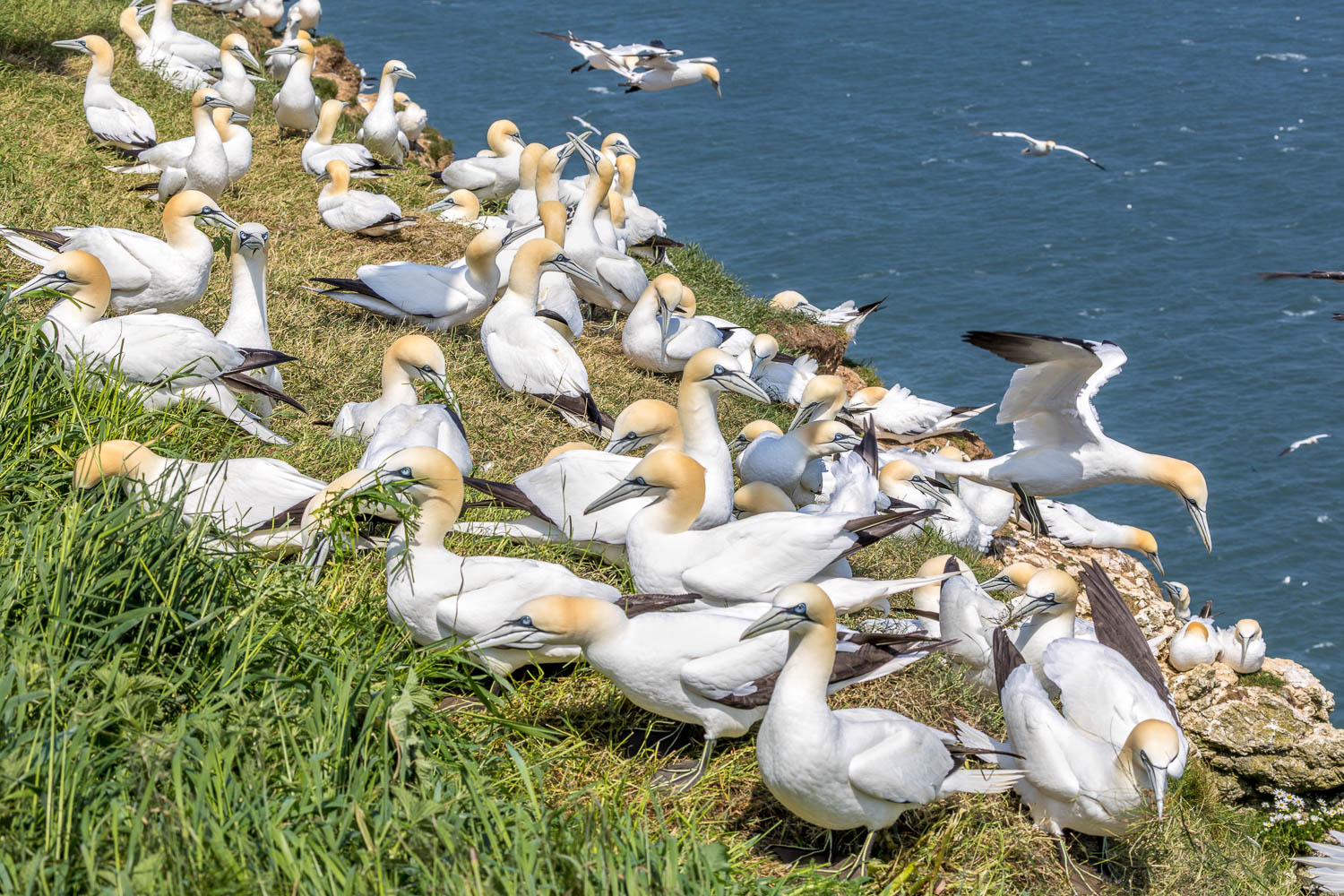
...and many gannets, all here for one purpose - to make more gannets
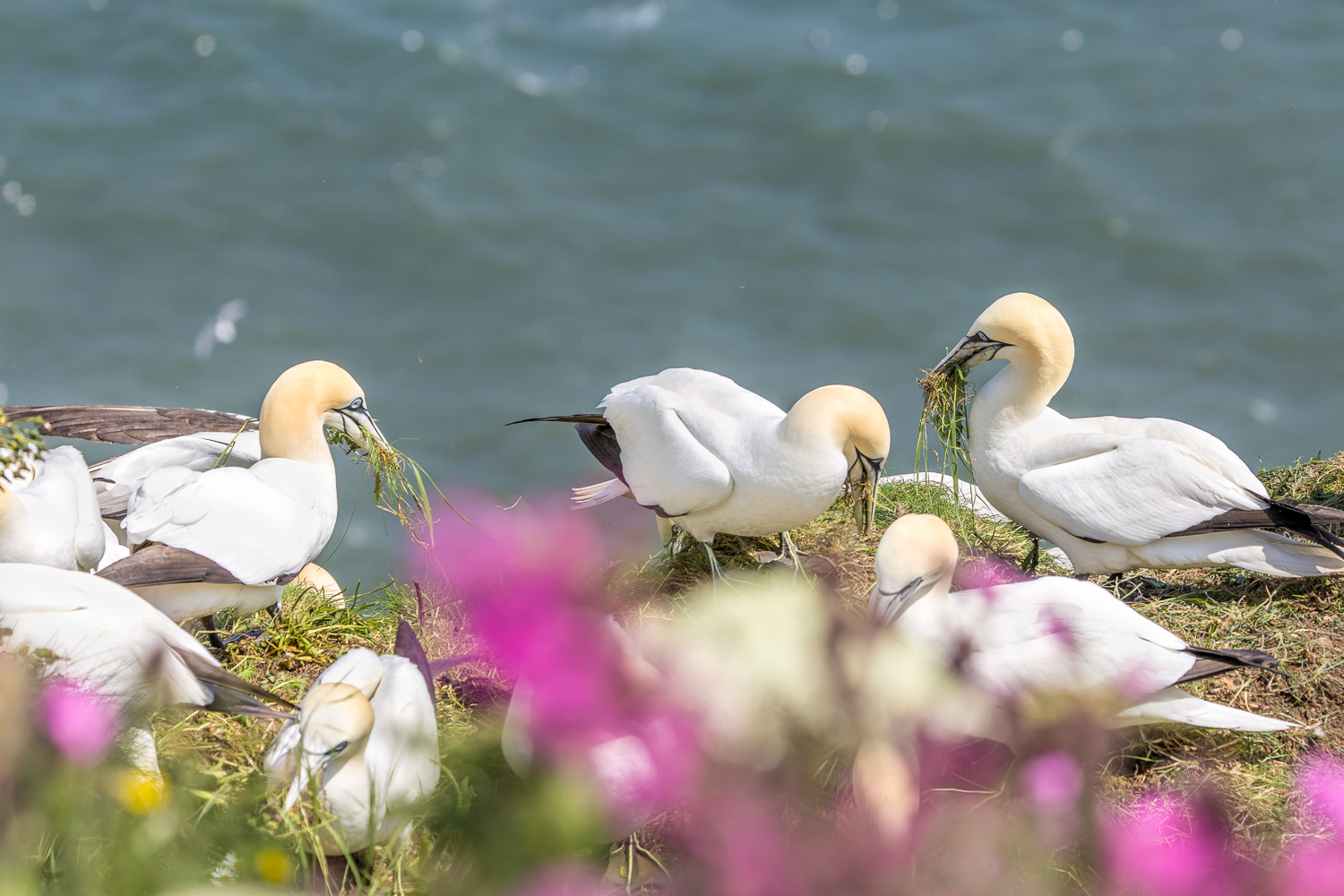
Gathering nesting material...
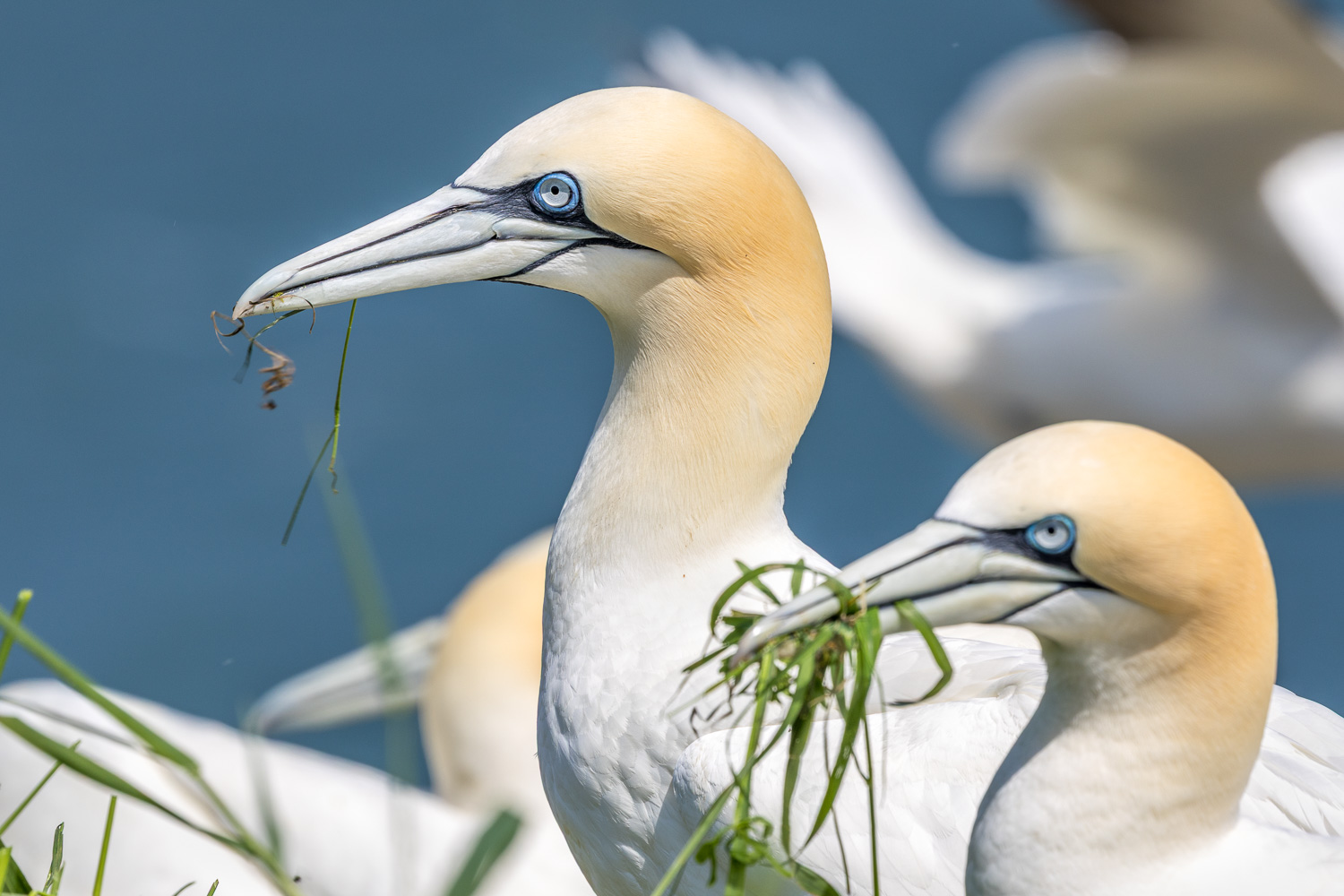
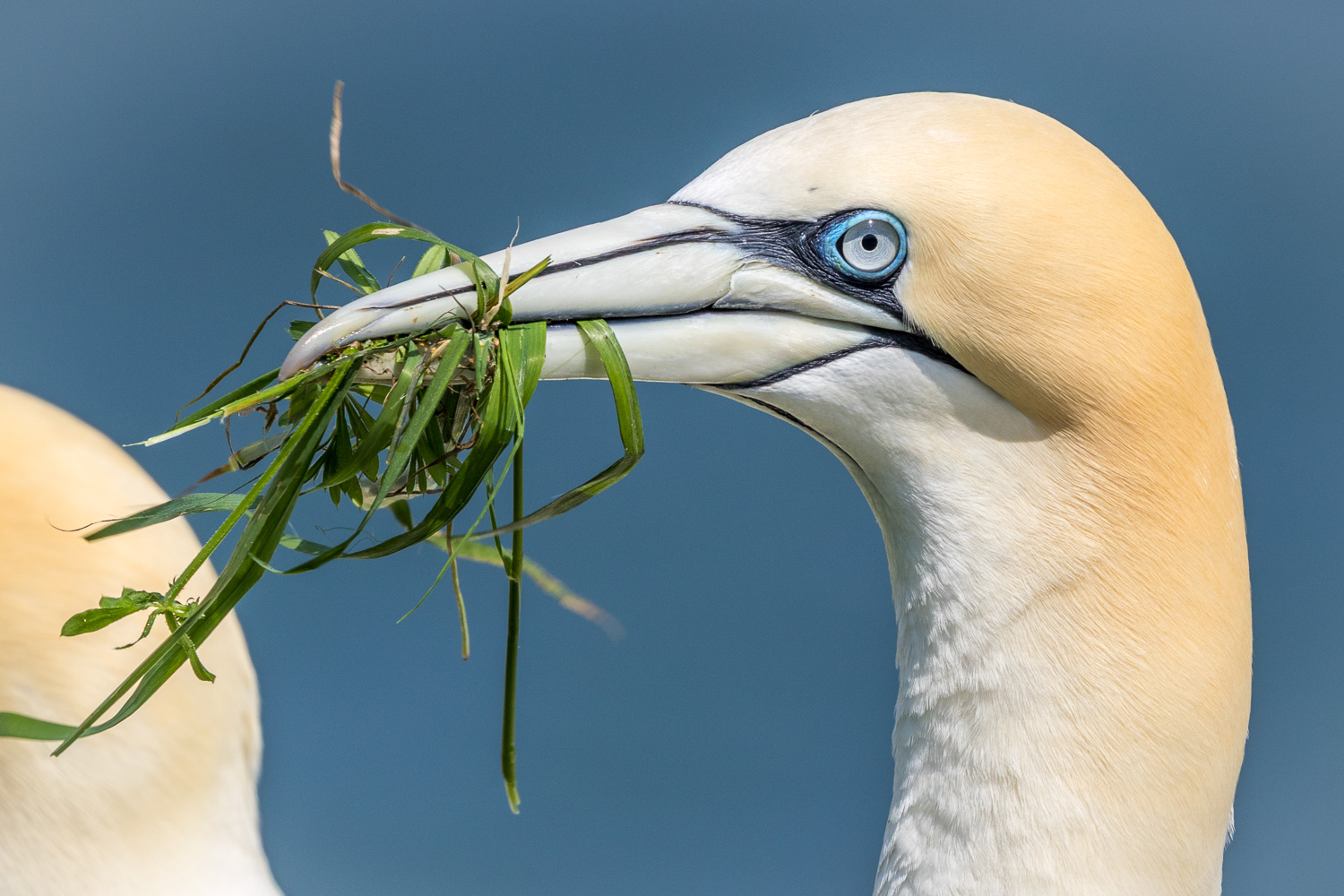
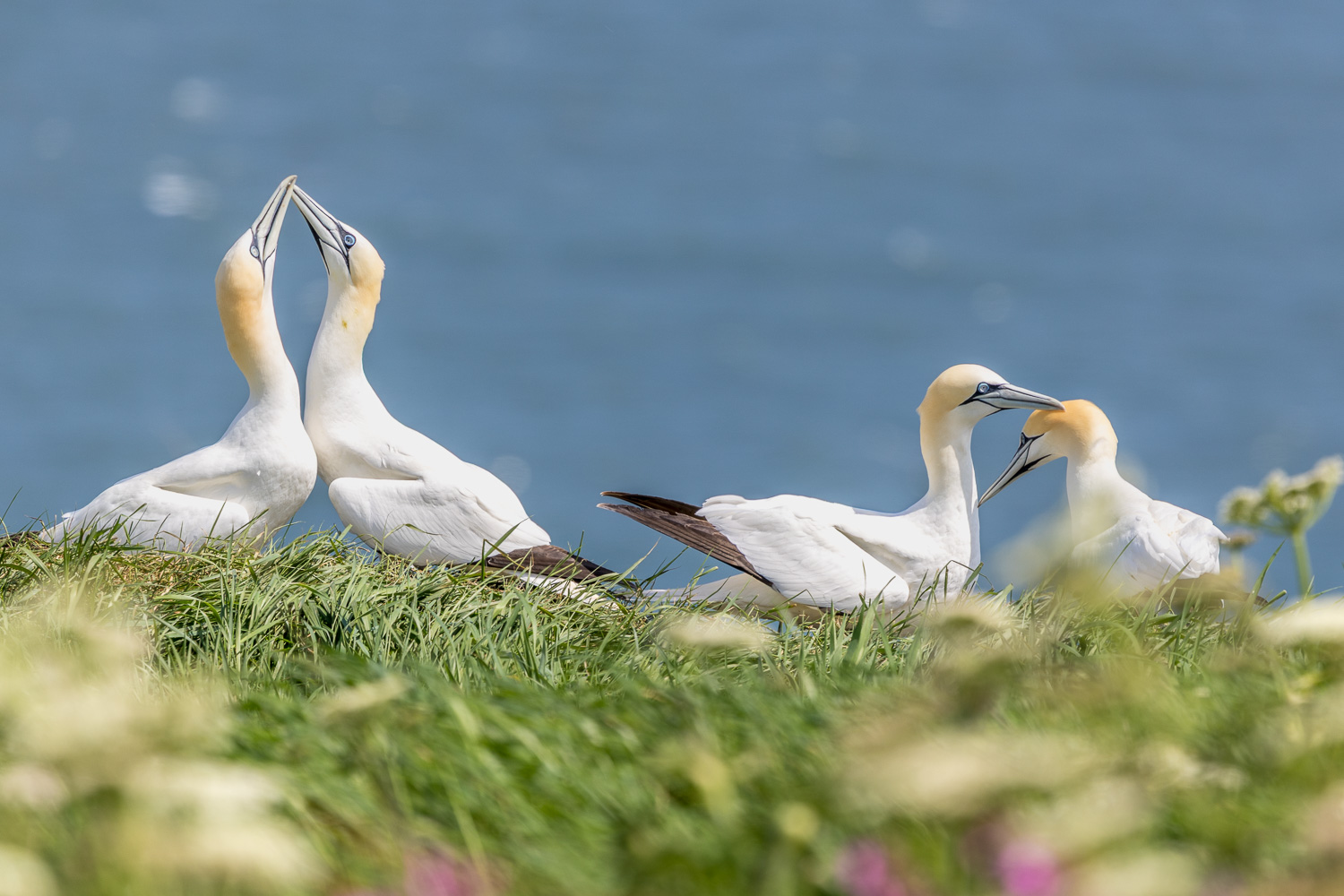
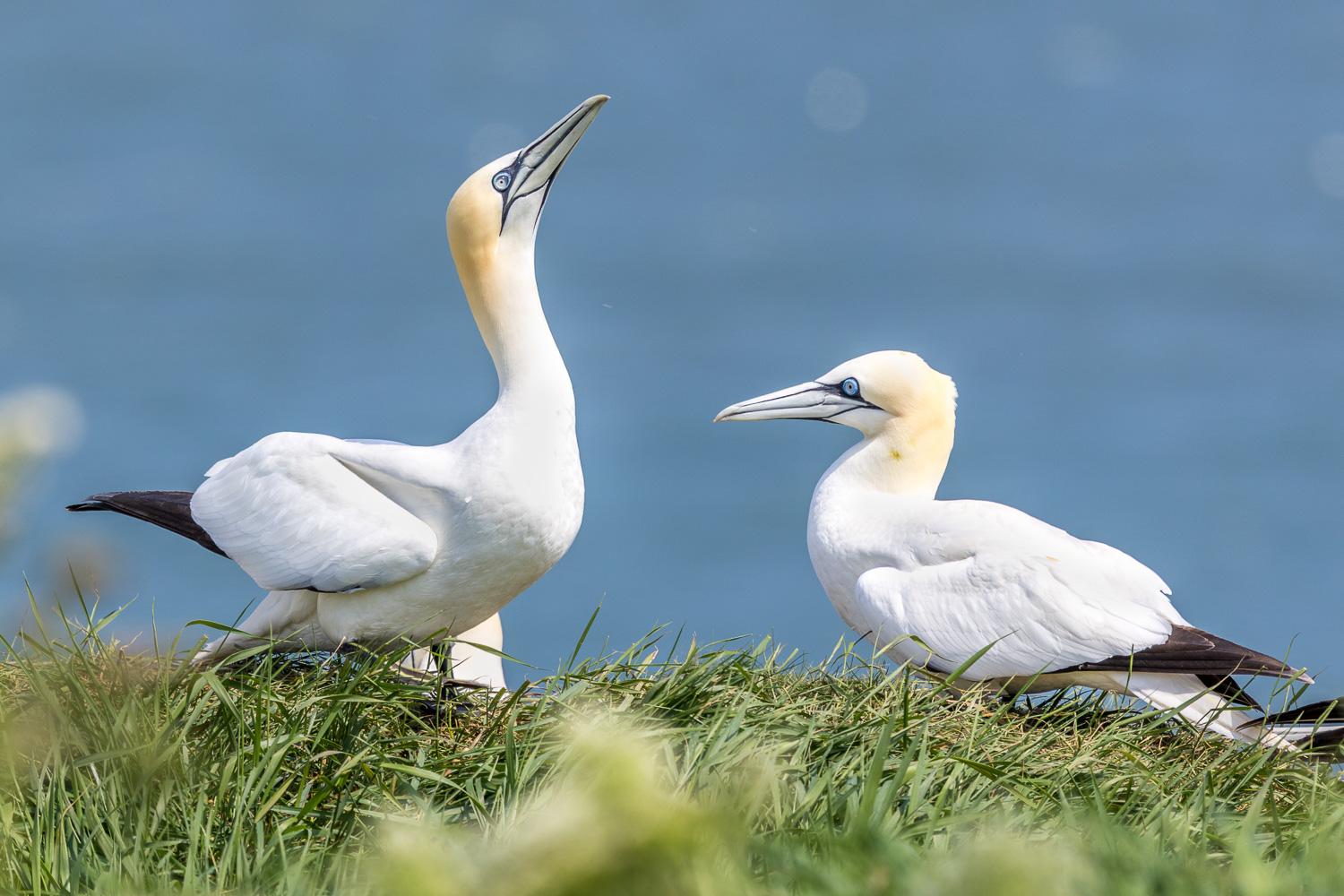
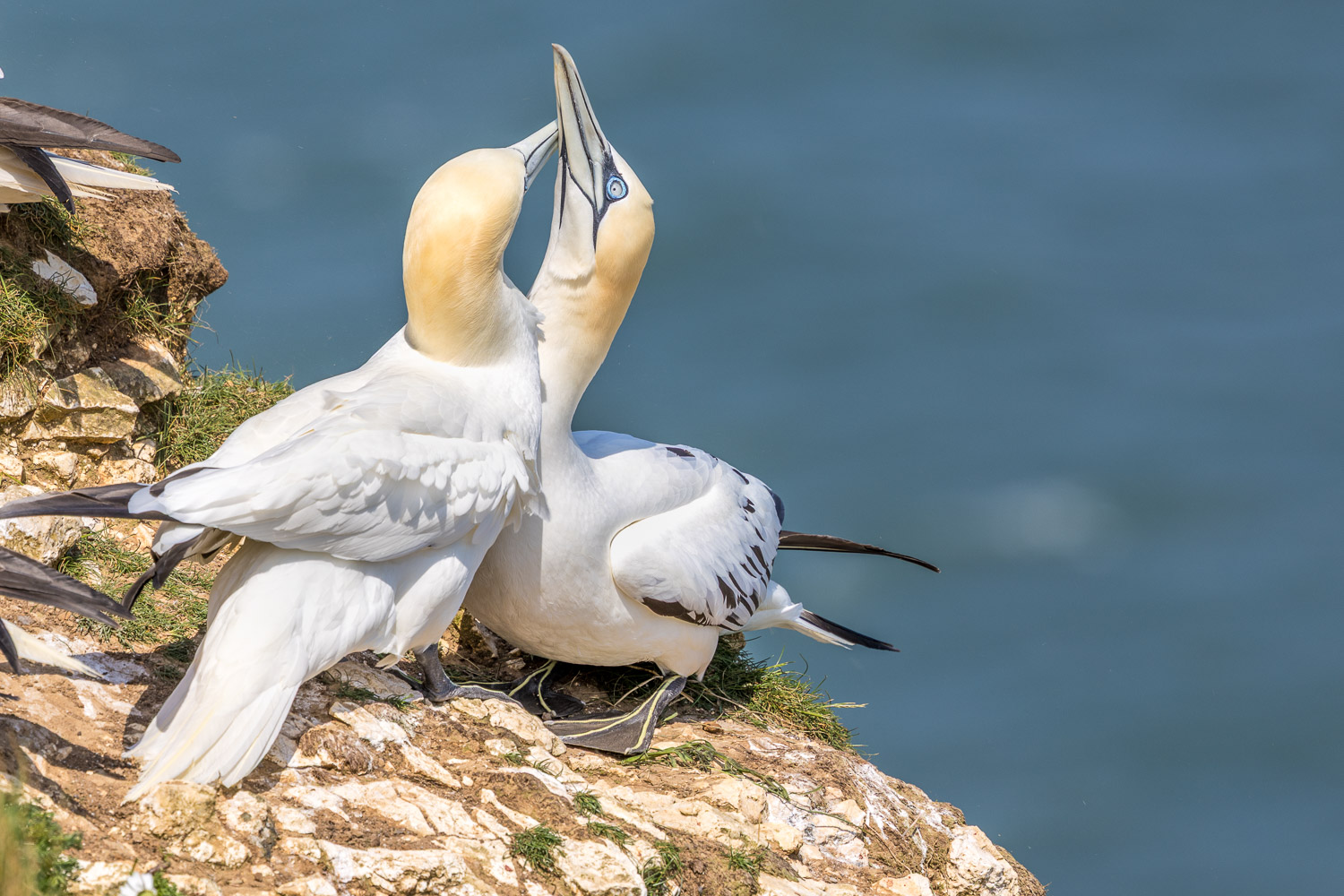
Courtship behaviour...
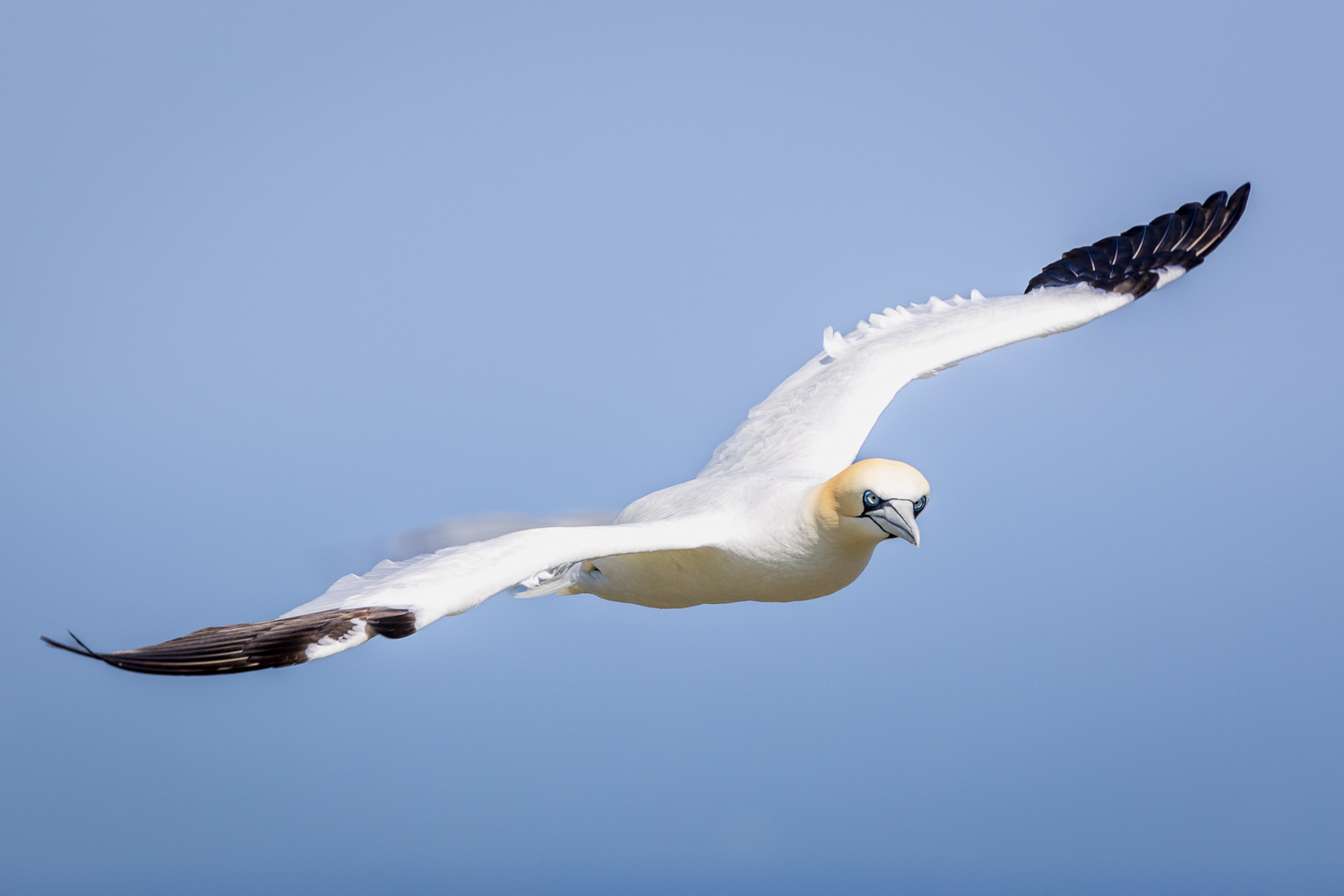
Gannets In flight...
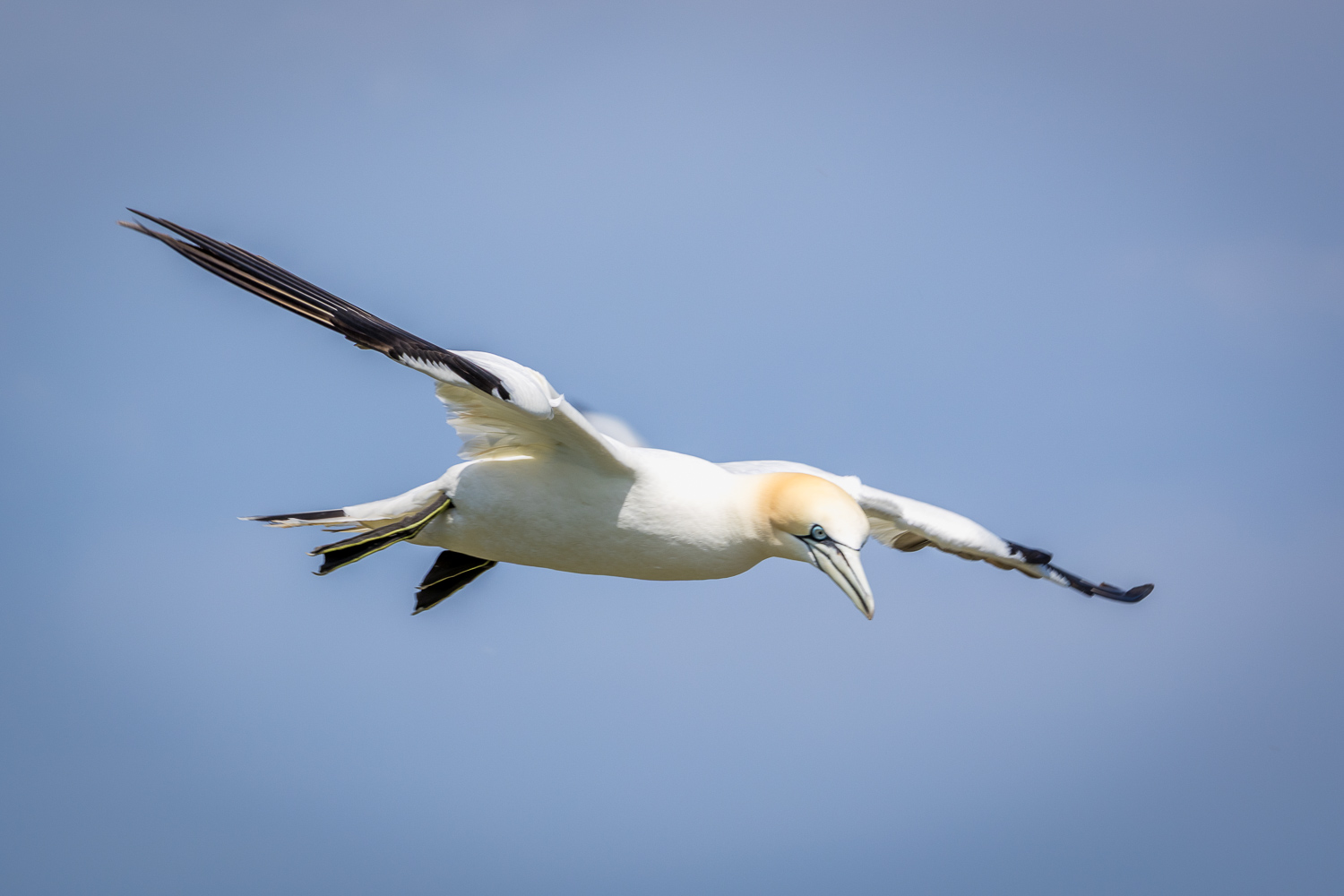
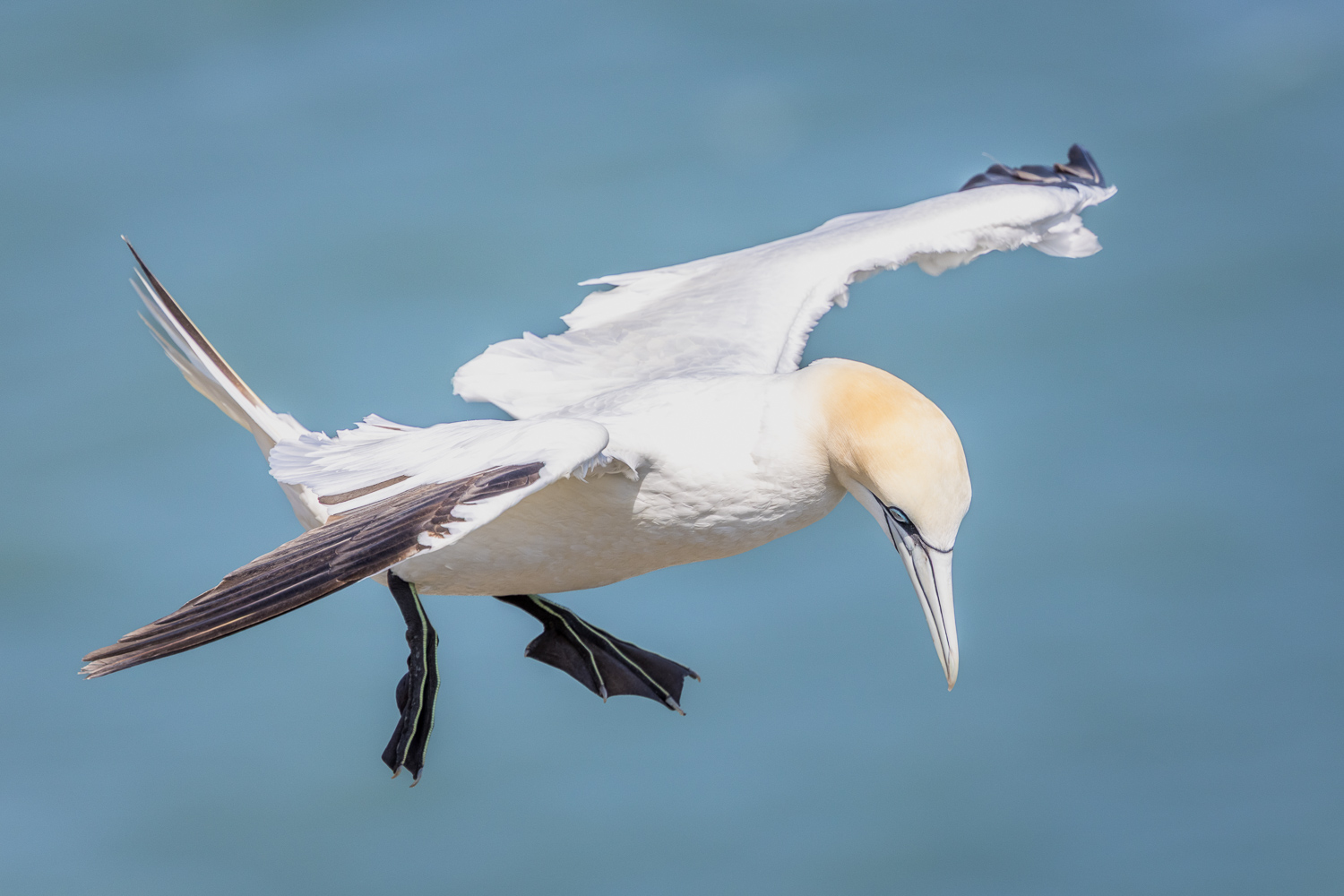
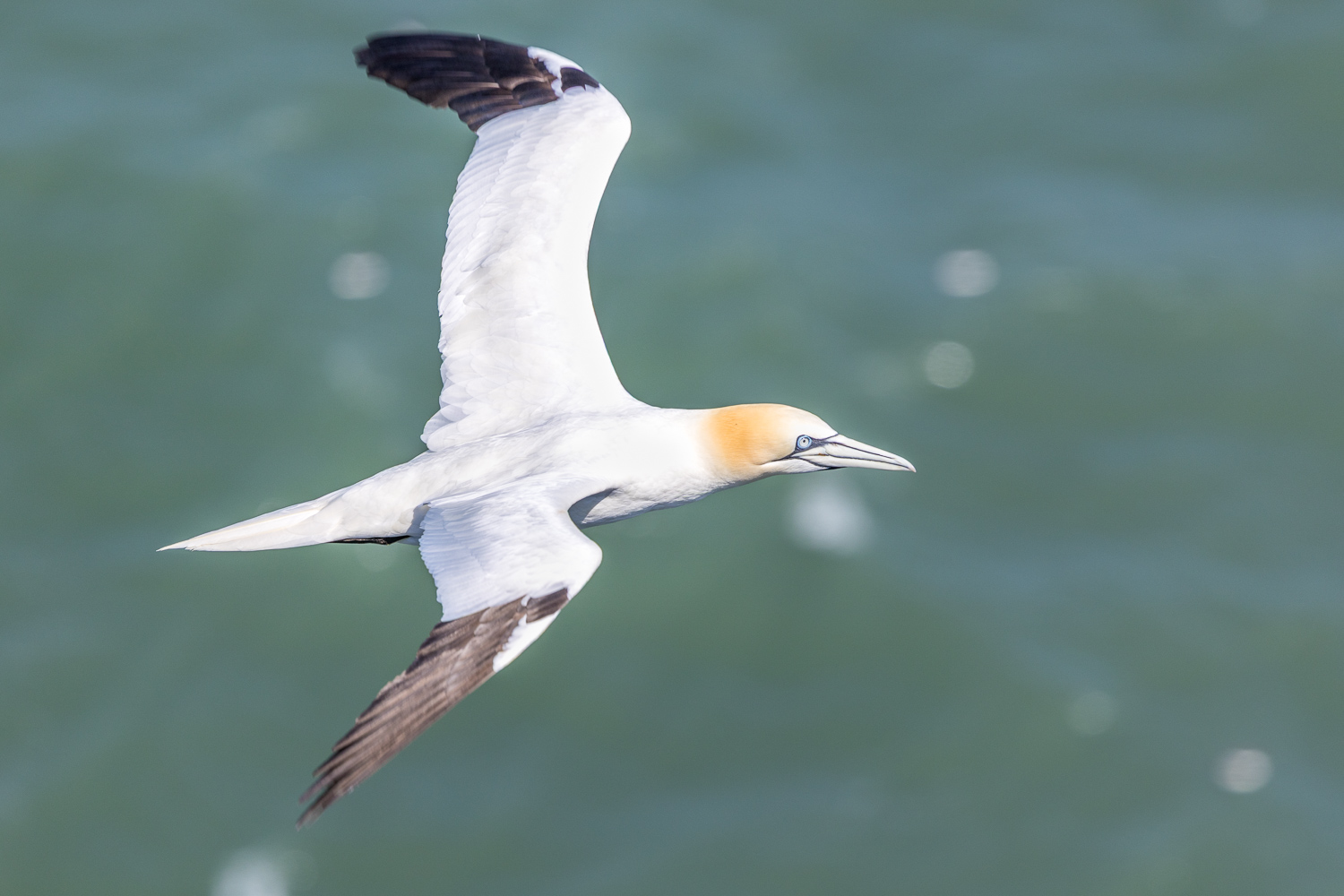
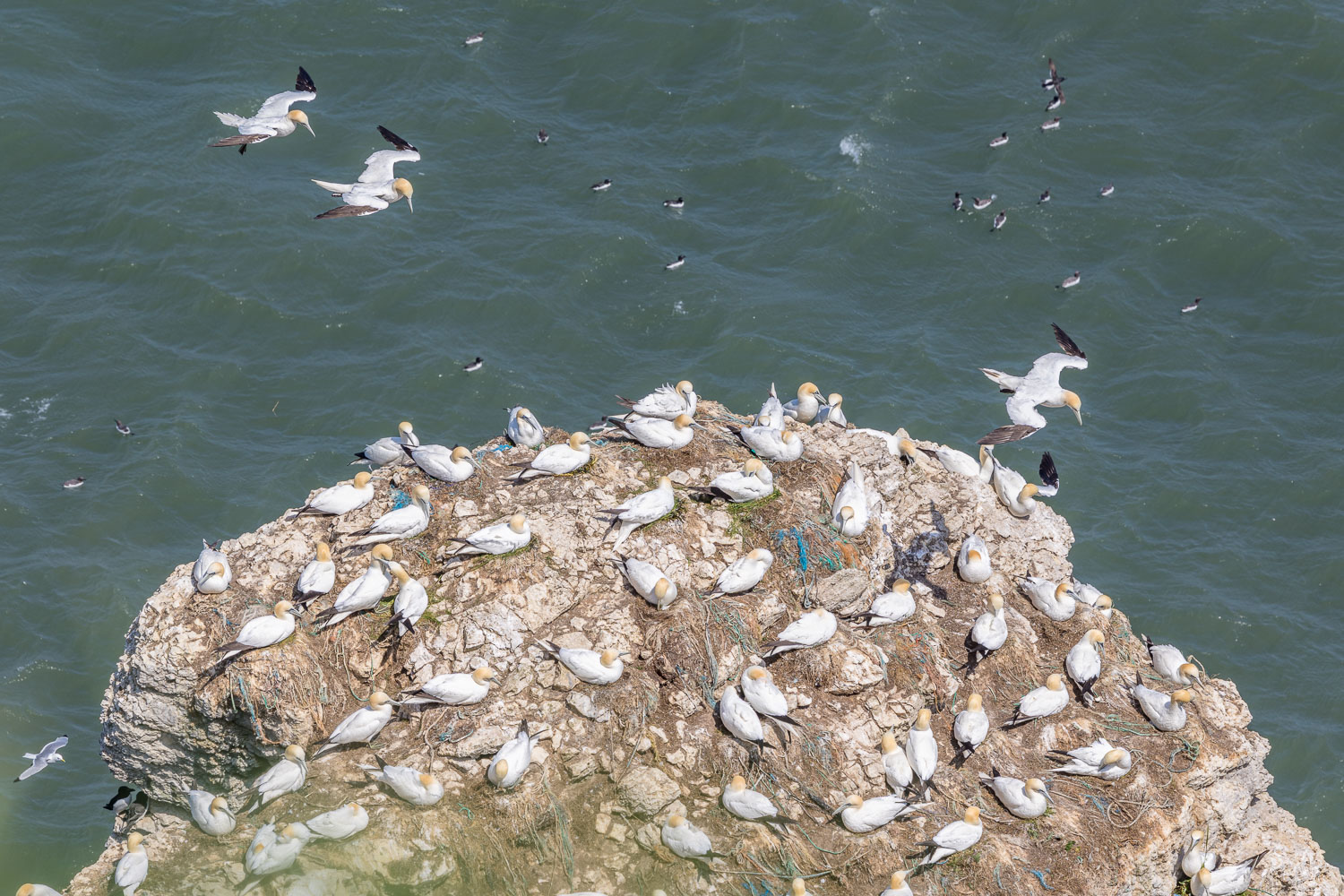
Every nook and cranny on the cliffs is booked for the season...
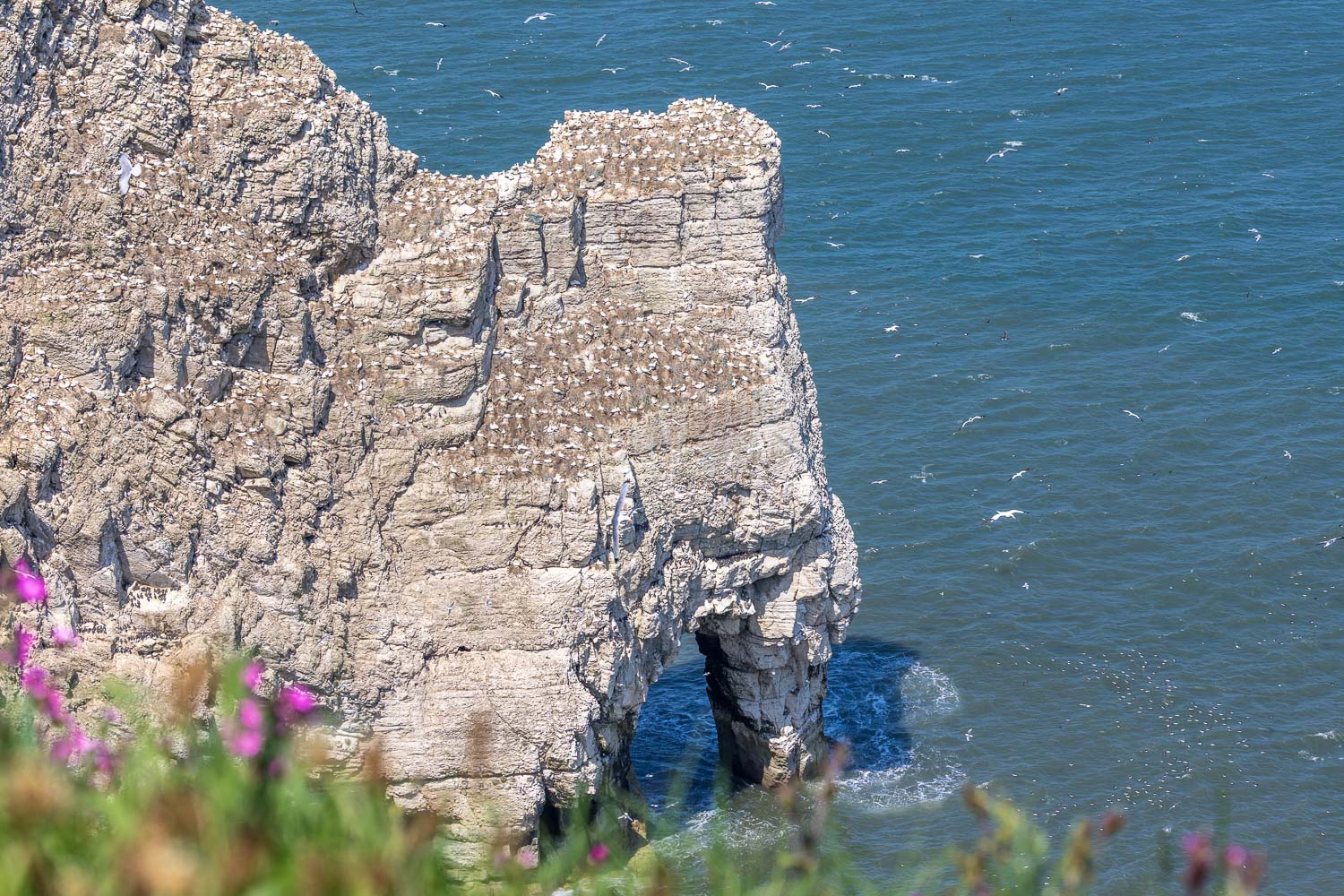
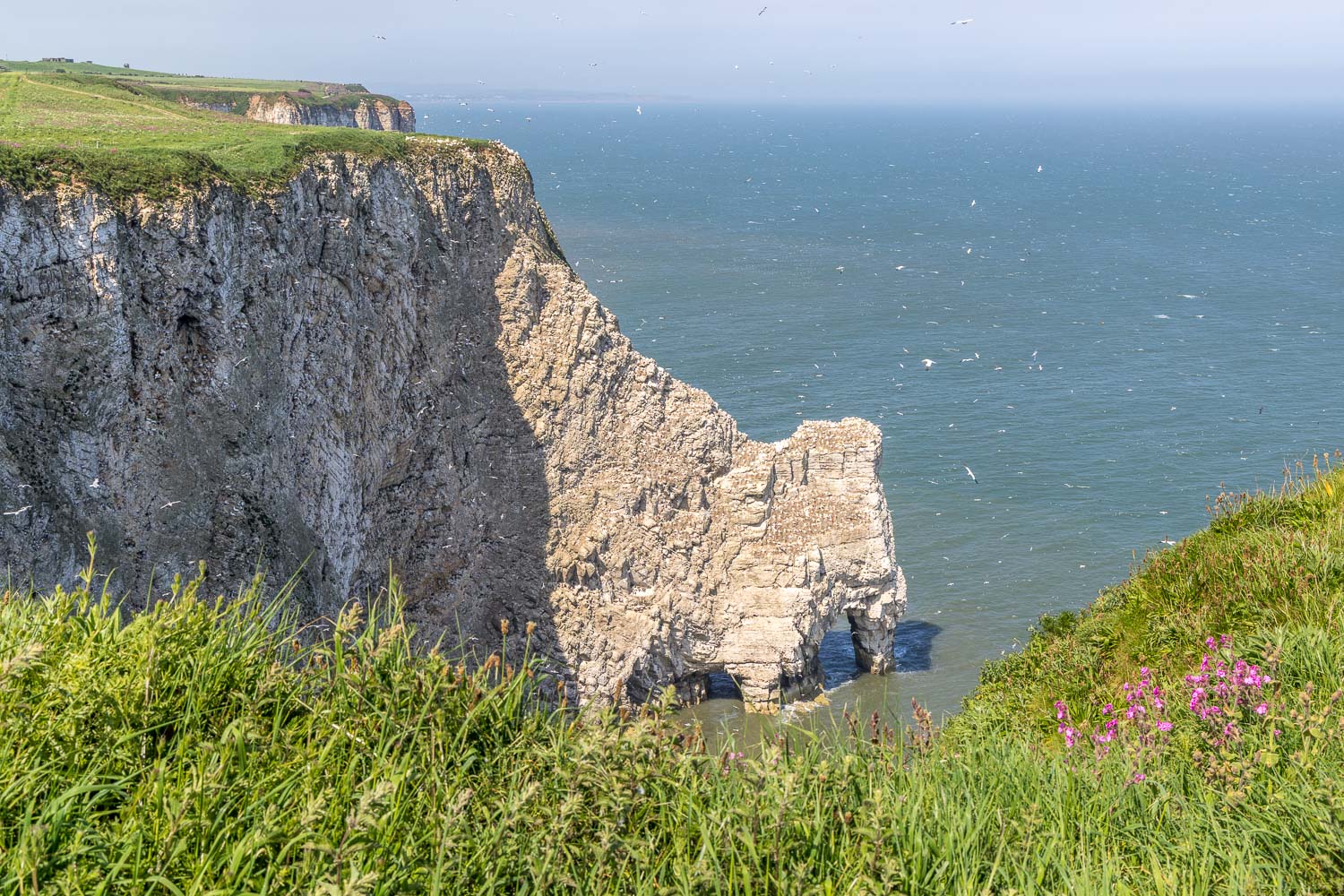
Looking north to the rock arch of Scale Nab
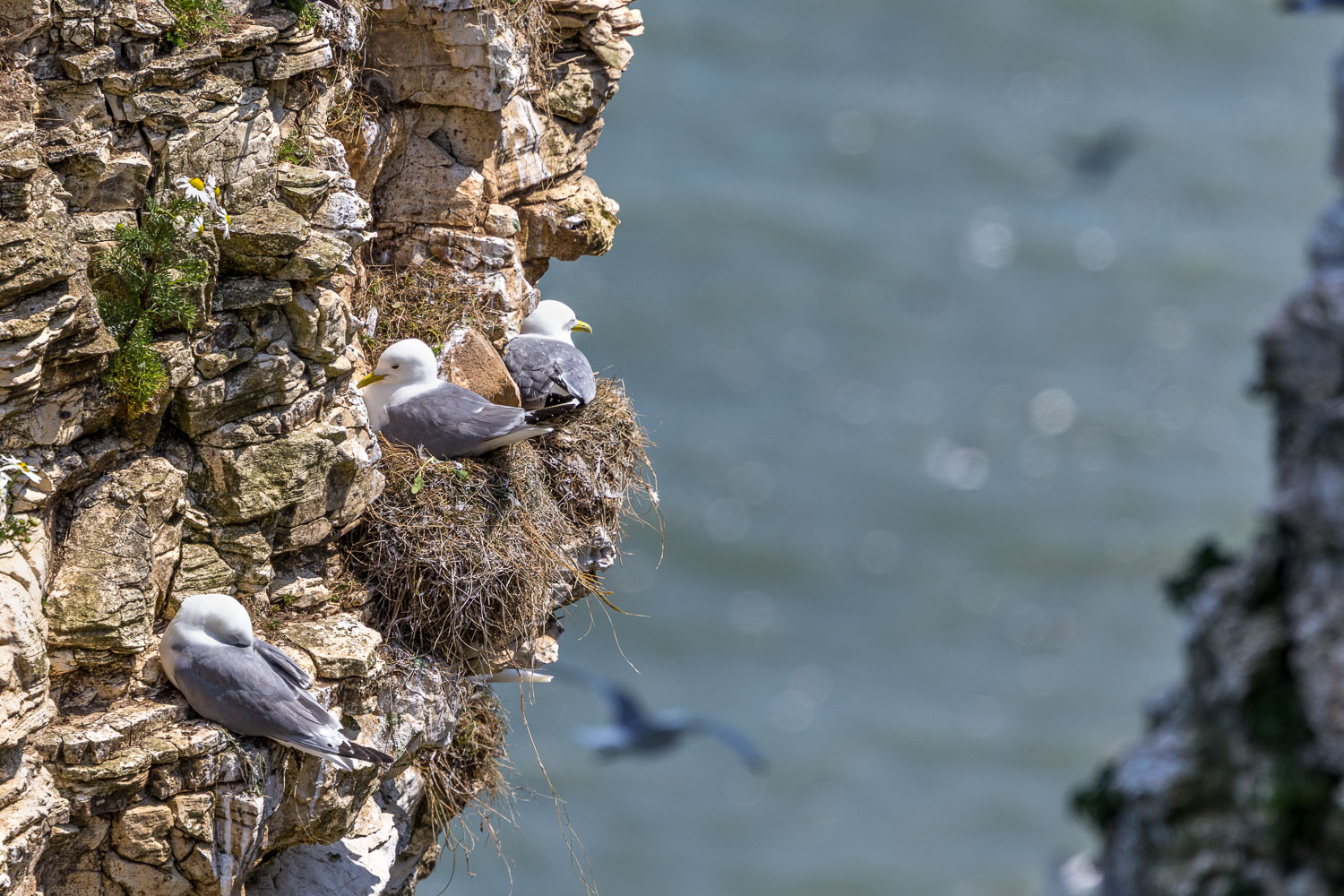
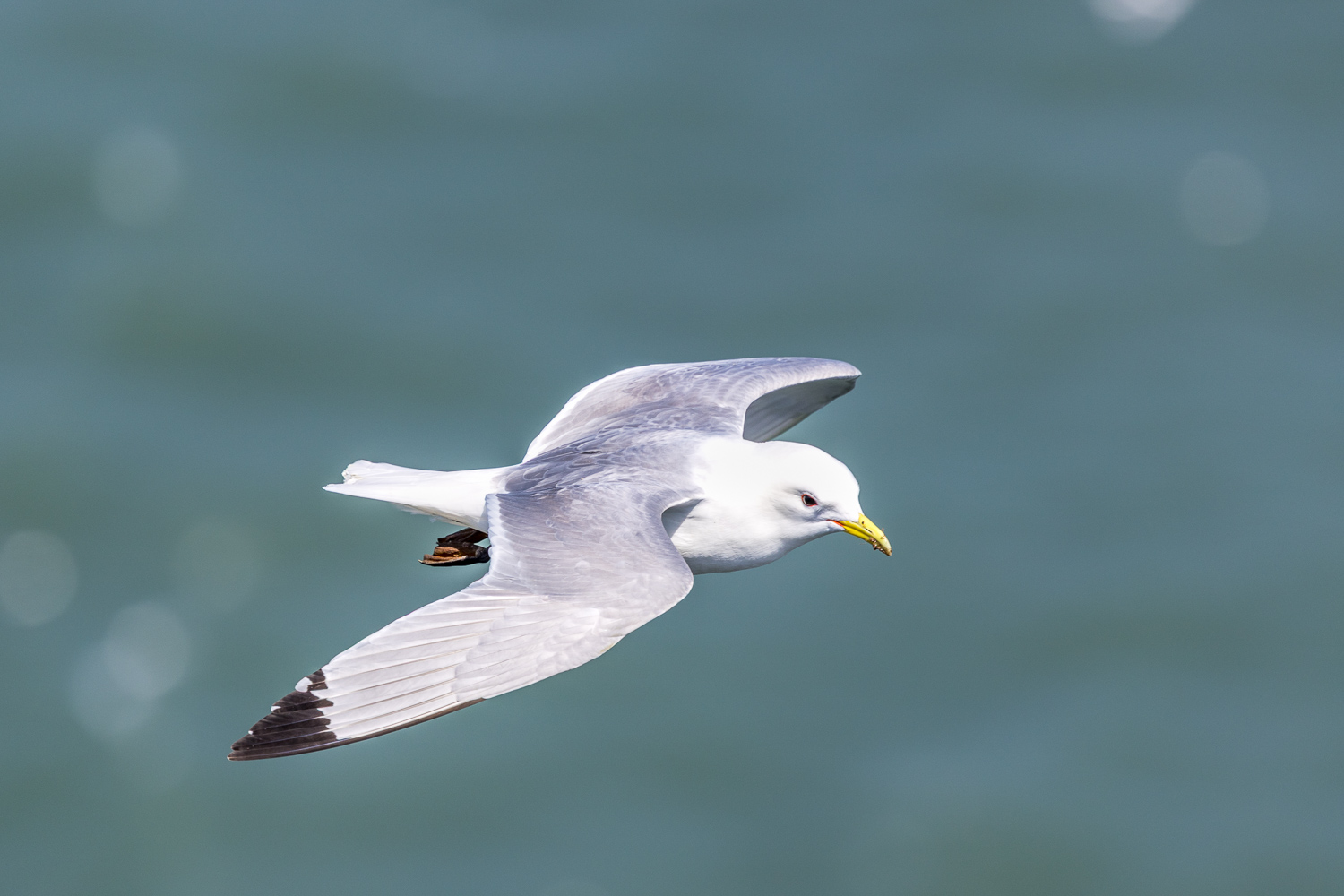
Although gannets are the dominant species, others are available including kittiwake
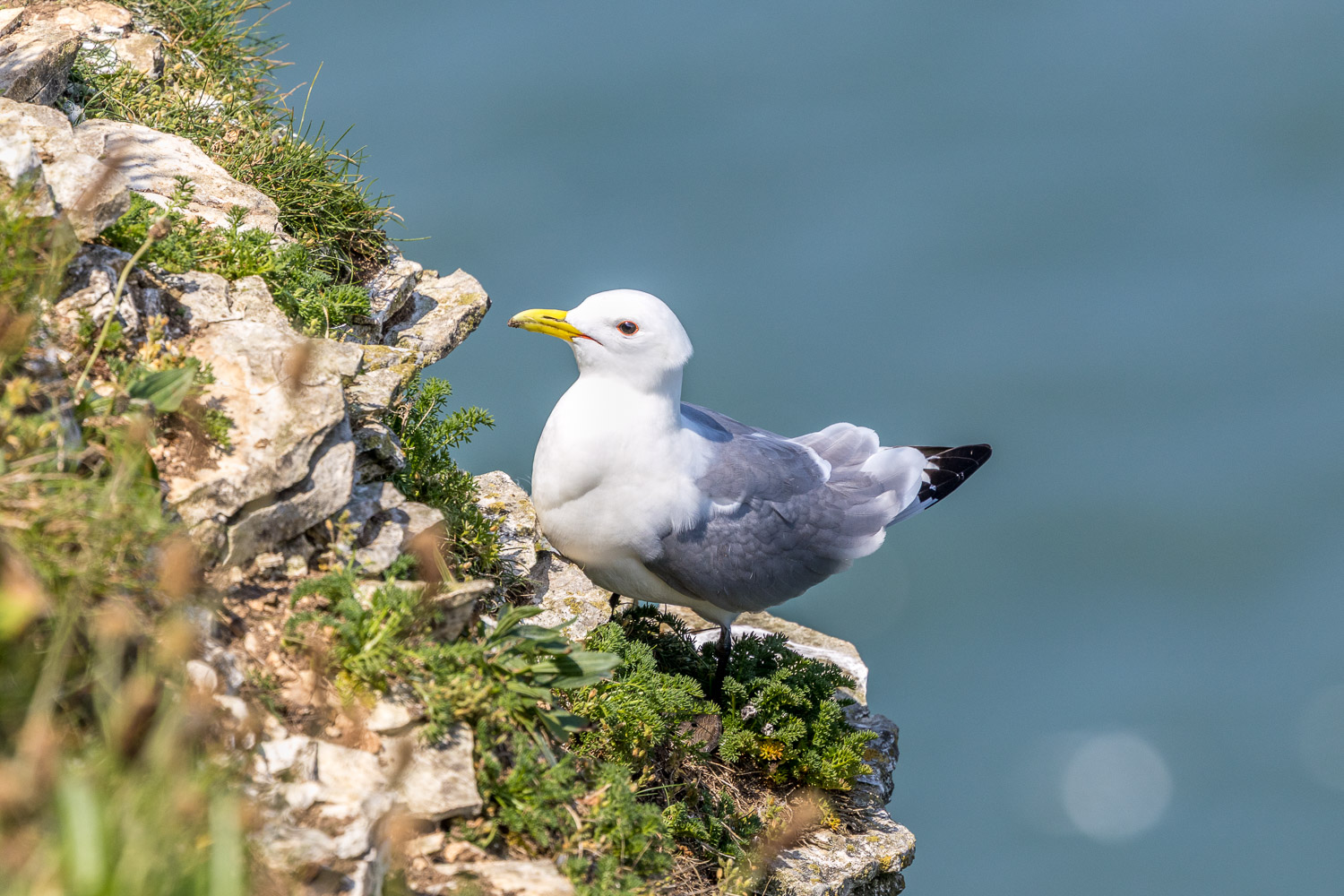
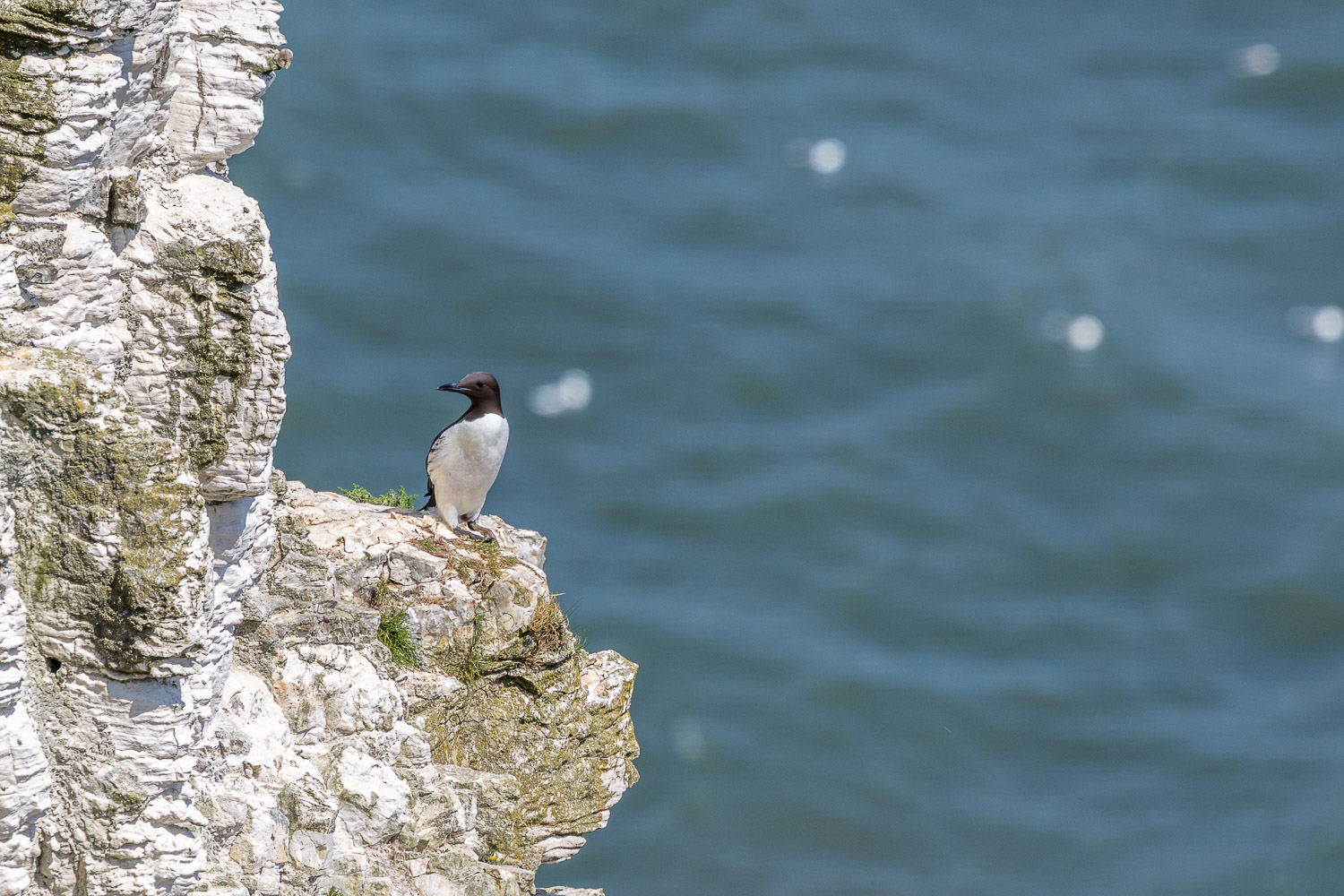
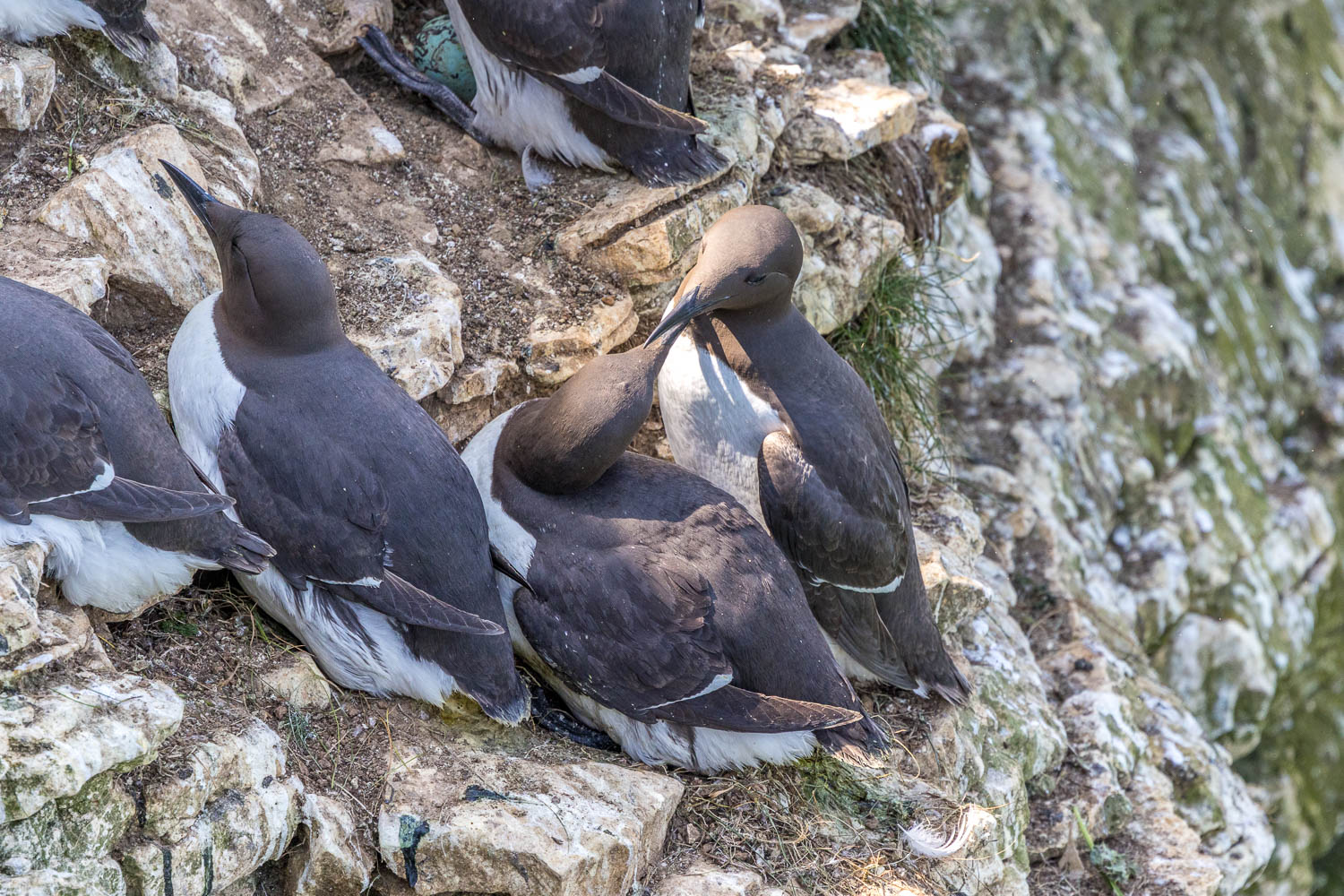
Guillemot
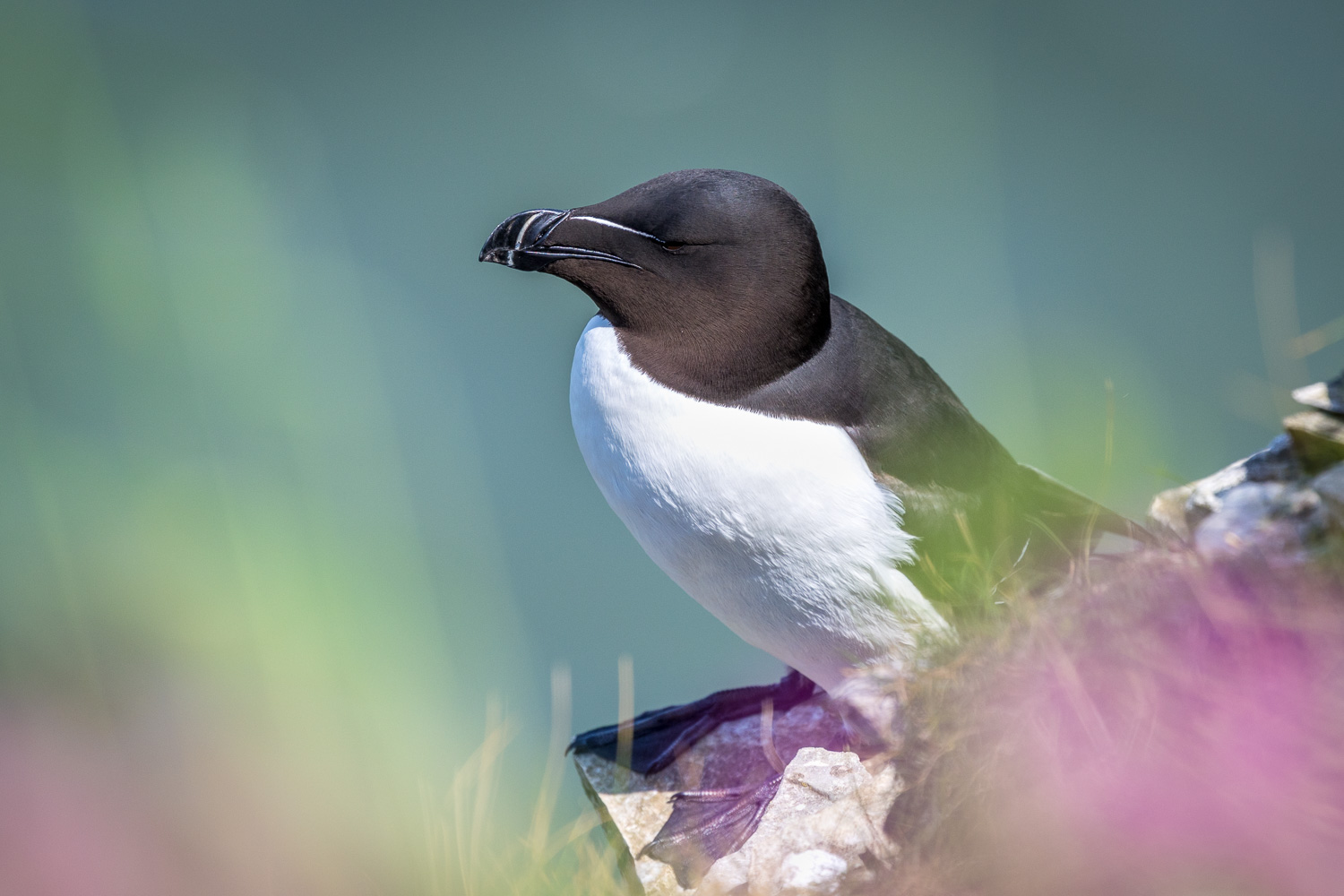
Razorbill
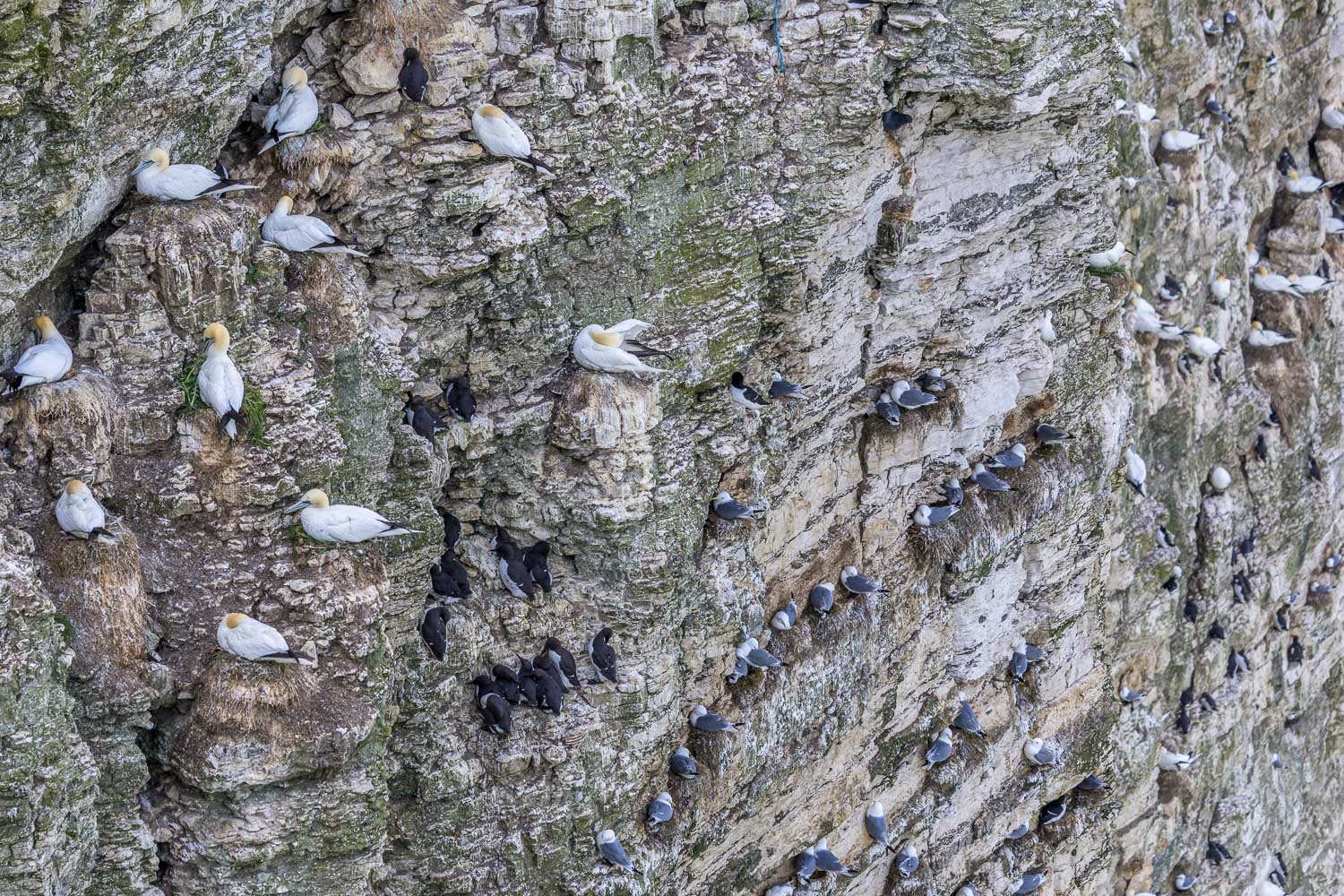
Colonies of different species on the vertical cliff face
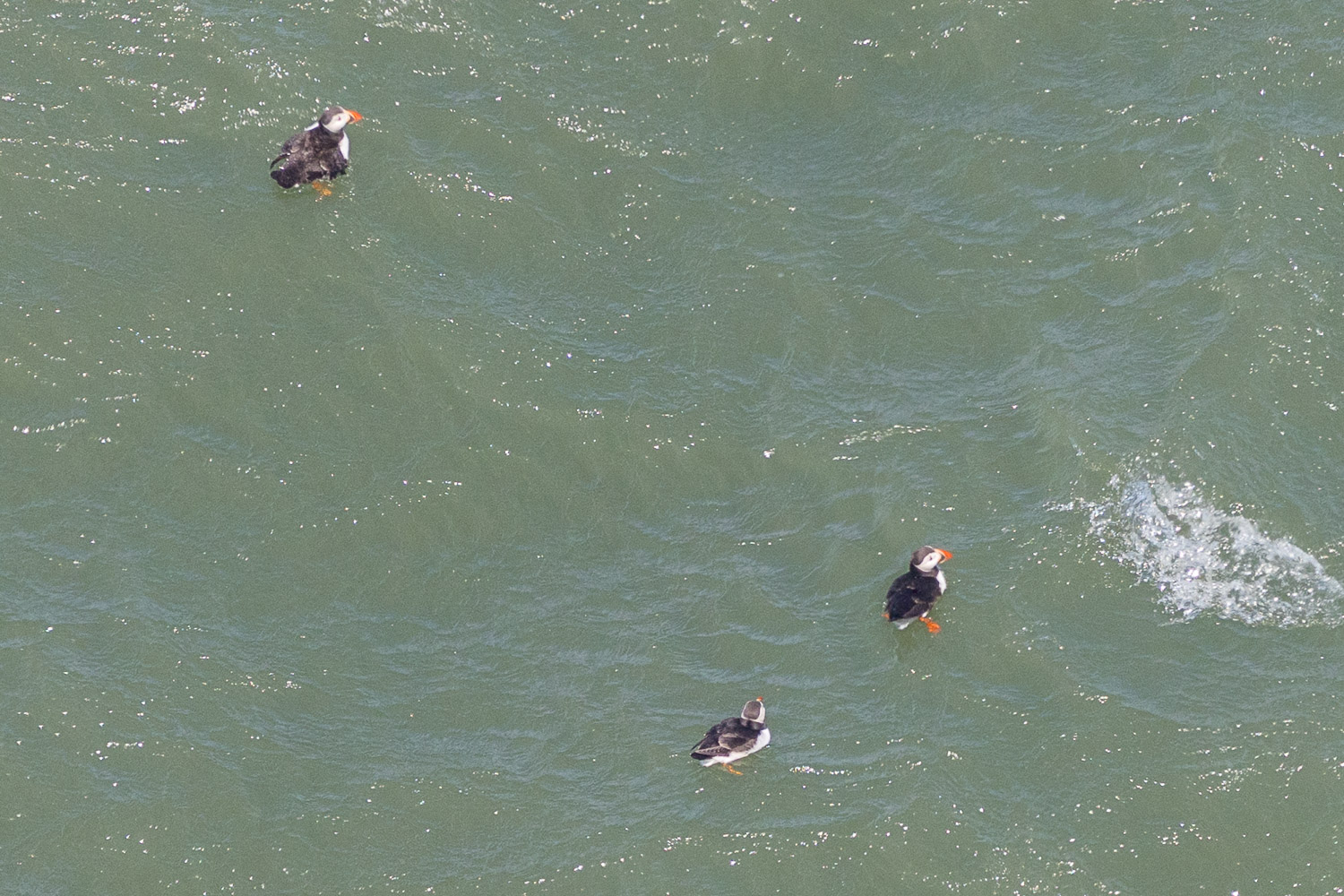
Three puffins in the sea far below. We spent some time looking for closer views but were out of luck today
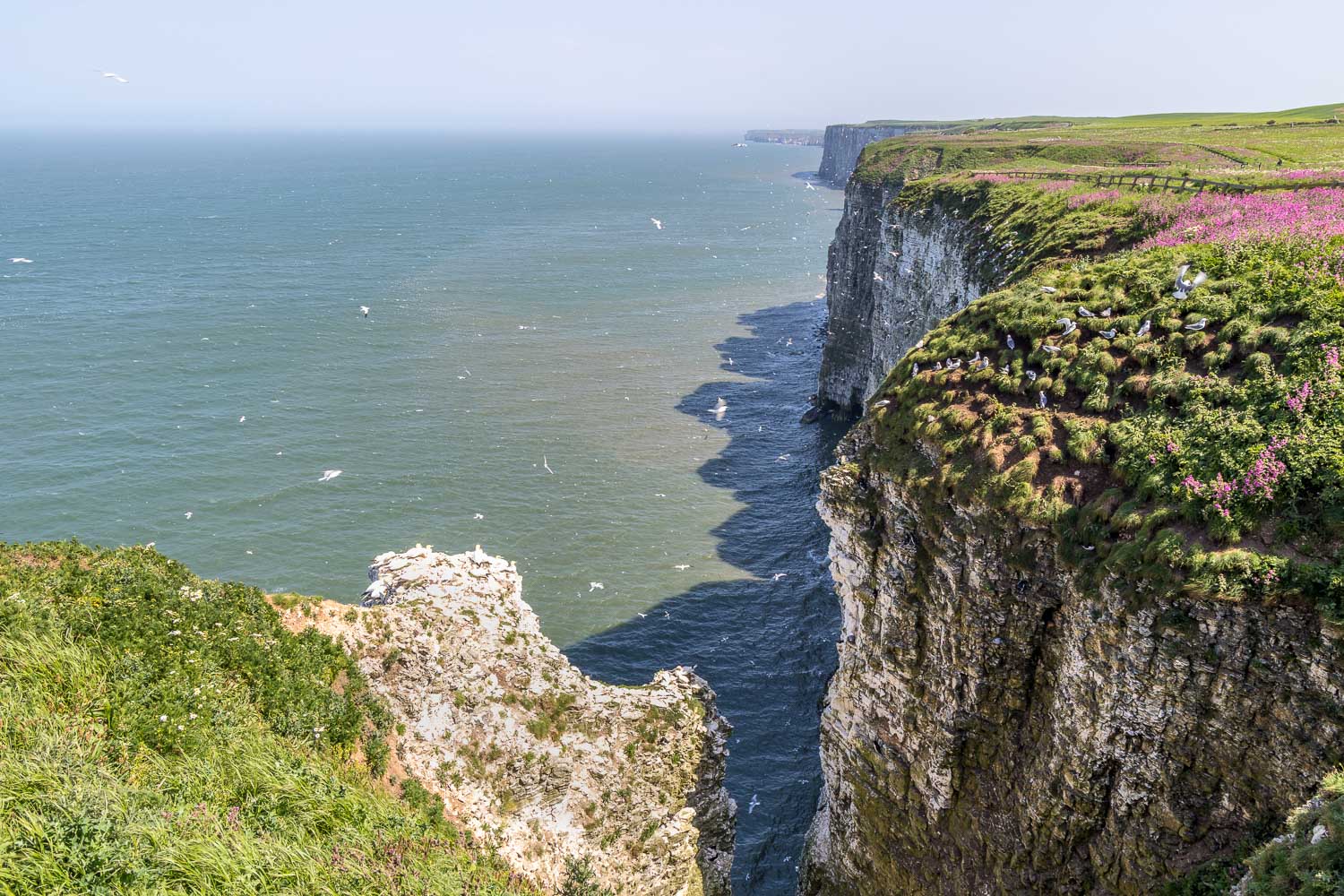
A final view along the spectacular cliffs as we head back to the start